
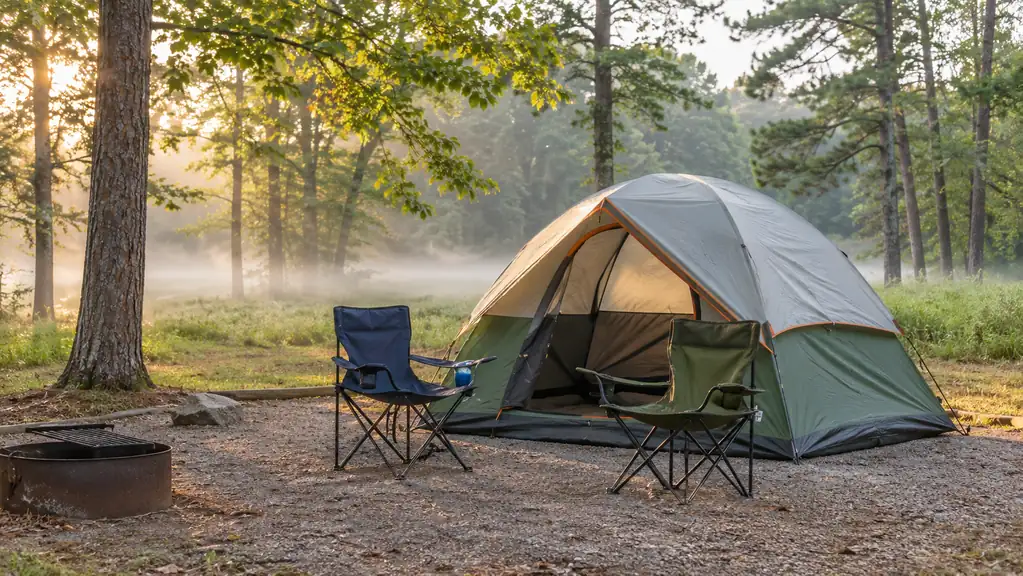
The first time I pitched the Coleman Sundome, I did it in the backyard in March with the instructions spread out on the grass, and it took me about thirty minutes. By the end of the season I was doing it alone in about fifteen, because Ray unloads the car while I set the poles. That is the whole case for a dome tent in one sentence, at least for the kind of camping we do.
We are not backpackers. We drive to a state park in north Alabama on a Friday afternoon, park beside a gravel loop road, walk about two hundred yards to a bathhouse, and sleep two nights. About ten weekends a season, March through October. The Coleman four-person Sundome holds the two of us and our bags. If your weekends look anything like that, here is what a plain dome actually buys you, and a few things it does not.
The tent that is standing before the cooler is unpacked
Coleman Sundome, four-person, 63 square feet of floor, freestanding, rainfly in the bag. It is the piece of gear I would replace first if mine walked off.
Amazon Check Today's Price on Amazon →It goes up in about fifteen minutes, by one person
The poles are sleeves, not clips, so you feed each one through a fabric channel along the tent. My first pitch took thirty minutes because I read every step twice out of caution. Now it runs about fifteen, and I do it myself while Ray carries the cooler down from the car. The order that works: lay the tent out flat, stake the four corners, cross the two long poles over the middle, rainfly last. Nothing about it is clever. It is just short.
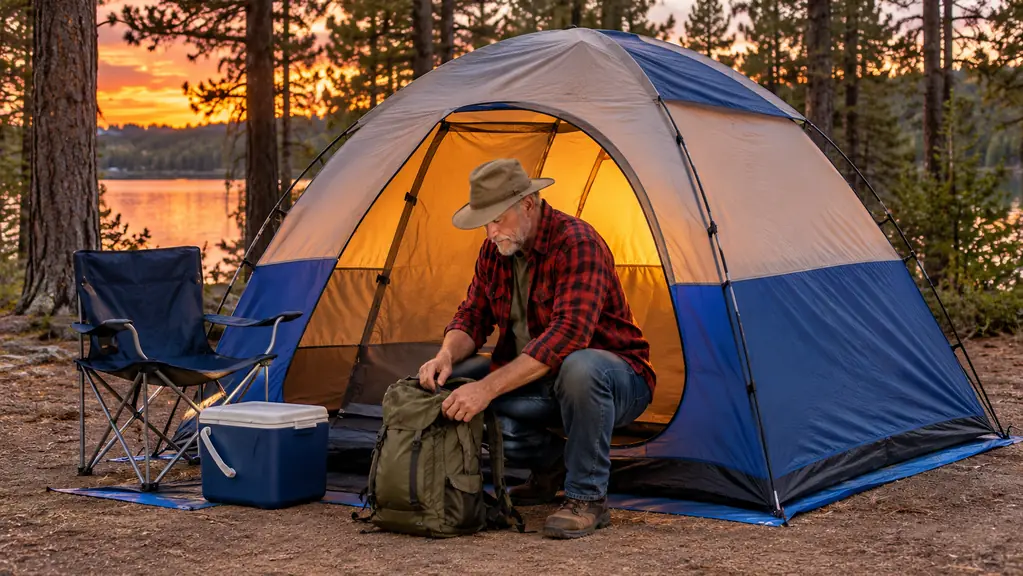
Freestanding means you can pick it up and move it
This matters more than it sounds. Our usual site has a root running under one corner, and the first time I set the tent there I was a good foot off the pad. Instead of pulling stakes and starting over, I lifted the whole tent and set it down two feet to the left. When you are tired and the light is going, that trick is worth more than any feature printed on the box.
63 square feet is more floor than two people need
The floor is 63 square feet and it is rated for four people. Ray and I use it as a two-person tent, which means our bags sit at the foot of the pads instead of on top of us, and there is still room to stand a duffel in the corner. Two adults plus two duffels is comfortable. Four adults in here for a whole weekend would be a different article, and probably a shorter friendship.
The rainfly held through one hard all-night rain
We hit one hard rain on a weekend in May, all night, rainfly on, and I stayed dry. That is one storm and I am not going to dress it up as a monsoon season. This Coleman is rated water resistant with a 1500 mm coating and the rainfly comes in the bag, which is the part that does the real work. If you camp in weather that dumps for three days straight, this is not the tent I would point you toward.
Two windows and a zippered door keep the air moving
There are two windows and a zippered door. On a warm evening in September I leave the door half open and both windows down, and air moves through the tent instead of sitting in it. This is not air conditioning and I would not sell it as such. It is enough to keep the inside from feeling like a parked car at four in the afternoon.
Ten pounds is a weight I can carry in one trip
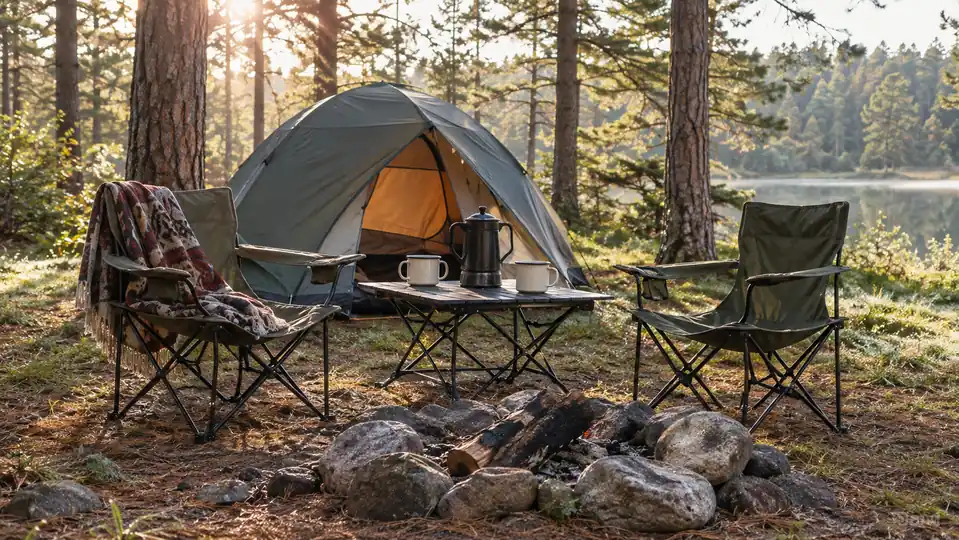
The whole tent weighs 10 pounds and it comes with a carry bag. I am 57 with a stiff lower back in the mornings, and I carry it from the CR-V to the site in one trip with the bag over my shoulder. Twice that weight would still be manageable. I just would not like it, and I would start negotiating with Ray about whose turn it was.
Three-season is the honest description, and it fits how we camp
The tent is listed as three-season, and that lines up with our calendar. March through October in the foothills, no snow, no December trips, no nights where I am worried about the fabric. It also has some UV protection, which has more to do with the tent lasting several summers than with anything you will notice on a given trip. Do not read a temperature rating into it, because there is not one.
Sleeve poles mean no bag of small parts to lose
The poles feed through sleeves, which means there is no collection of plastic clips to leave on a picnic table or drop in the grass at dusk. Feed the pole, the tent stands up, move on. Some people find clips faster to work with and I believe them. I have never once missed them, and I have definitely lost things in the grass at dusk.
A low dome sits square on a pad and leaves you a chair spot
The floor is rectangular, so it sets square against a gravel pad instead of leaving you odd wedge-shaped gaps to work around. The dome profile stays low, which is what I want on an open site when the wind picks up in the afternoon. On a site that is barely wide enough for a tent and a car, it fits and still leaves you a place to put two chairs.
There is nothing on it to learn and nothing to break
No electronics, no air beams, no pump, no learning curve past the first afternoon. Zipper, sleeves, poles, rainfly. If a zipper starts to catch, you wax it. If a pole splinters, you replace a pole. That is the entire maintenance list after eight months of use on the Coleman, and it is the reason I stopped shopping around after the first month.
That is the full list, and none of it is exciting. A dome tent is not a piece of gear you show people. It is the thing that is already standing when your neighbor is still fighting a bag of poles in the dark, and that is the sort of quiet advantage I have come to care about more each season.
What I'd Skip
Skip the big cabin tent if there are only two of you. I have watched neighbors wrestle a tall one onto a pad in a crosswind and it looked like a two-person job for four people. Skip the instant pop-up unless you have practiced folding it at home, because the folding is the hard part and it always happens in front of an audience. And skip any thought of carrying this Coleman Sundome on your back. It is 10 pounds and shaped like a duffel, and it belongs beside a car. If you want one honest caution: this tent will not make a cold night warm, and it will not fix a bad site. It keeps the rain off and the bugs out, and that is the job.
One hard all-night rain in May, rainfly on, and I did not get up once to check for a wet spot.
If you are starting from nothing, this is the first thing I would buy
Four-person Sundome. Freestanding, rainfly included, 10 pounds in a bag, and a pitch you can learn in one afternoon in the backyard. Nine camping weekends later, mine is still the easiest part of the trip.
Amazon Check Today's Price on Amazon →