
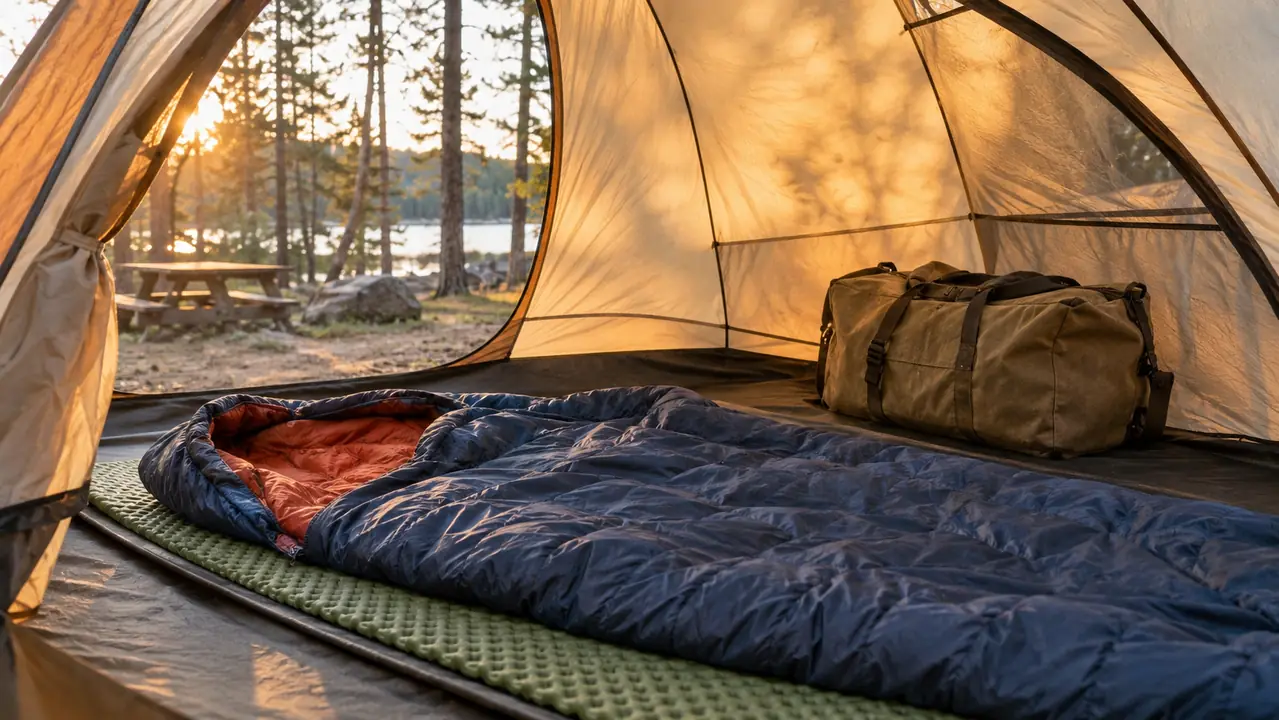
Last February I gave up on an air mattress at two in the morning, on my hands and knees on the tent floor, running my fingers around the seam looking for the valve while Ray slept through the whole thing. That mattress had gone soft on me four weekends running. Not a dramatic blowout, just a slow leak that put my hip on the ground by two and left my lower back grumbling until lunch the next day.
So the first week of March I bought the Therm-a-Rest Z Lite Sol. New, mine, paid for at the register. It is a closed-cell foam pad, 72 inches long and 20 inches wide, three quarters of an inch thick, and there is no valve to hunt for in the dark because there is no air inside it. I have slept on it every camping weekend since, about ten two-night trips at state park campgrounds across north Alabama, and I have a fair picture now of what it does and what it does not do.
The Quick Verdict
Firm, thin, and it has never once gone flat. It fixed my mornings. It is not a soft bed and it never pretends to be one.
Amazon Check Today's Price →The pad that finally stopped going flat at 2 a.m.
Closed-cell foam, 72 by 20 inches, three quarters of an inch thick, 14 ounces. No valve, no pump, nothing to leak. Ten camping weekends under me and it has not failed once.
Amazon Check Today's Price on Amazon →How I've Used It
I am not a backpacker and I want to say that plainly, because the Z Lite Sol gets talked about mostly by people who carry it up mountains. I am 57, retired, and I live outside Fort Payne. I day hike three to six miles most weeks from March to October and I car camp with my husband about ten weekends a season at state parks with bathhouses. The pad lives in the back of our Honda CR-V and gets laid out on the tent floor. That is the whole test. No summit camps, no backcountry miles, just a real person sleeping on it twice a month for eight months.
Packing it is a thirty-second job. It folds along the score lines, and after a season it folds itself, the way a good map does. I lay it in the back of the CR-V on top of the duffel, and Ray unloads the car while I pitch the tent. By the time the Sundome is up I have the pad unfolded flat on the floor and my bag rolled out on top of it. No waiting for anything to self-inflate, no topping it up before bed. That sounds like a small thing until you have spent twenty minutes on your knees working a pump in the dark while everyone else is already asleep.
Every one of those weekends it went down on the floor of our Coleman Sundome before my sleeping bag went on top of it. I never inflated anything, never topped anything up in the night, never woke up on the ground. Ray still uses his own pad, a generic thing he has had for years, and I will leave his out of this.
The morning difference showed up faster than I expected. By the second weekend I was getting out of the tent without that first stiff minute of standing there deciding whether to bend over. I am not going to tell you it cured anything. I have a stiff lower back in the mornings and I expect I always will. What I will tell you is that the floor of that tent stopped being the reason.
What the Listing Numbers Mean Once You're Lying On Them
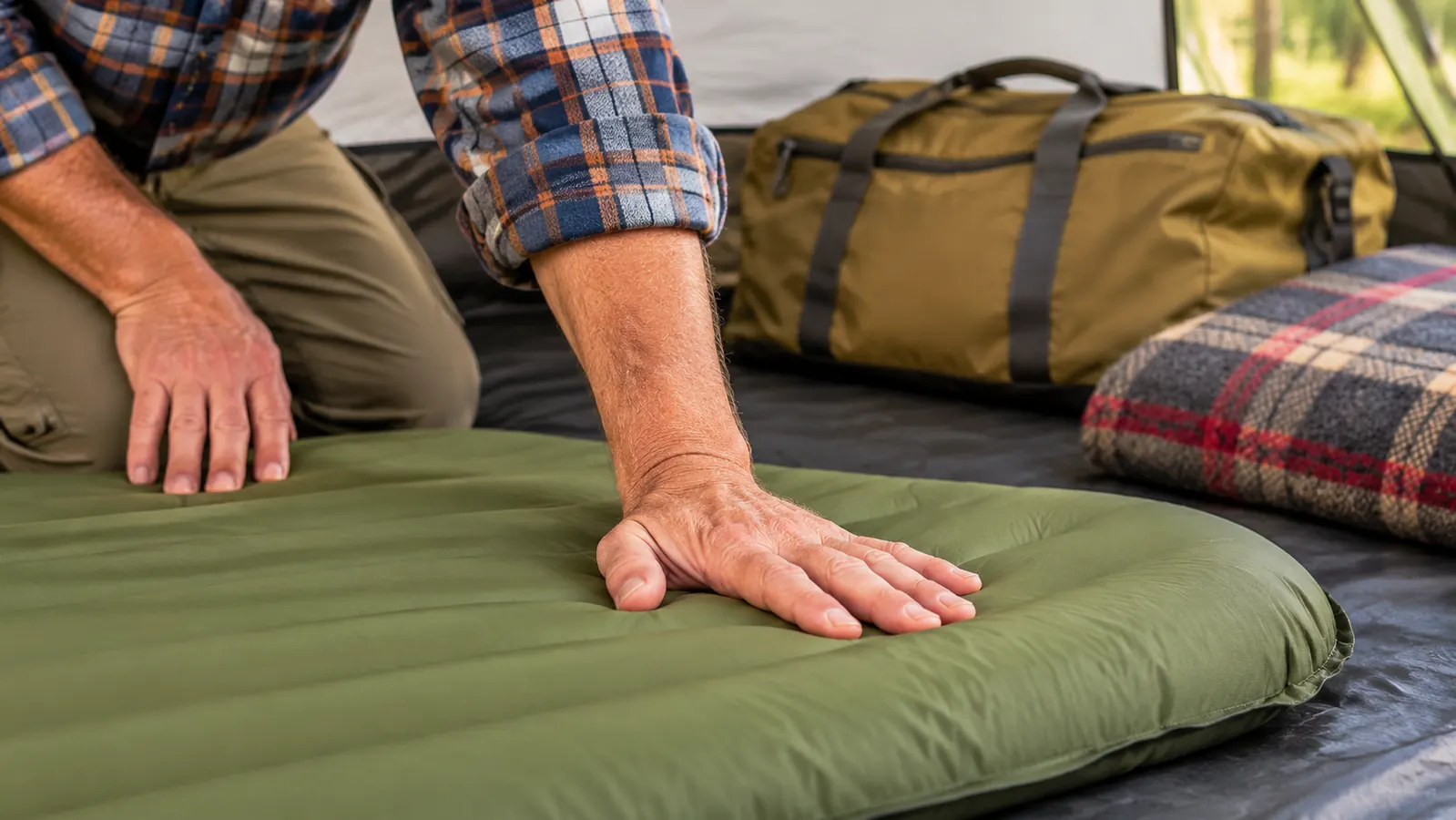
The specs explain the whole experience if you read them closely. Seventy-two inches long and 20 inches wide is a full-length pad, so my heels land on foam instead of tent floor. Three quarters of an inch thick means firm. Not cushioned. Firm. The material is what Therm-a-Rest calls ThermaCapture, and the listing says the reflective coating plus the dimples molded into the foam trap radiant heat and push warmth up by about 20 percent. I cannot measure 20 percent on a picnic table. I can tell you the pad never felt cold underneath me, and I am a person who sleeps cold.
It weighs 14 ounces and folds down to 20 by 5 by 5.5 inches. For car camping that is almost beside the point, since it rides in the back next to the cooler. It matters if you are carrying it, and it is the reason hikers like this pad. Folded, it is small enough to tuck behind the seat of the car or slide under a pack lid, and it stays folded without a stuff sack holding it.
It is water resistant rather than waterproof, made in the USA, and covered by a limited warranty. The closed-cell foam cannot puncture in any way that matters. There is no seam to split and no baffle to fail, which was the entire appeal after a winter of chasing leaks. In eight months of gravel, tent floors, and one muddy weekend, I have not put a mark on it that did not wipe off with a wet rag.
Sleeping On It: The First Two Weekends and Everything After
Here is the honest part. The first night felt like sleeping on a yoga mat, because that is roughly what it is. Three quarters of an inch of foam does not absorb a hip bone. I slept on my back that first night and woke up fine. I rolled onto my side in the second half of the night and my shoulder let me know about it before breakfast.
By the second weekend I had my own system figured out. Pad down first, then the bag, then a thin camp pillow, and I stopped fighting the firmness and started going to sleep on my back, which is how I sleep at home anyway. If you are a committed side sleeper, this pad is not the one for you, and I would rather say that here than have you find out at eleven at night with a flashlight in your teeth.
One weekend in June the low never dropped below about seventy and I slept on top of the bag with just a thin sheet over me. Foam does not hold heat on you the way a pocket of air does, and I did not wake up clammy the way I used to on the air mattress. That was the weekend I stopped carrying a backup plan. The old mattress left the house in February, and I had been treating the pad as if it might still need one. After June I stopped.
What surprised me is how little I thought about it after that. Good gear disappears. I have not had a single night on this pad where I was awake at two in the morning messing with it, and compared to the air mattress that is the whole review in one sentence.
Ten camping weekends, twenty nights on the ground, and the pad never went soft once. The air mattress made it four weekends before I gave up on it.
Cold Ground, Wet Weather, and the Noise
Two things people always ask about. The first is warmth. Foam does not behave like air, which shifts cold around under you all night, and the reflective coating is doing real work here. On a clear late March night in the foothills I was comfortable in clothes and a bag. I am not going to quote a temperature rating for it, because the pad does not carry one and I am not going to invent a number.
The underside is worth a mention too. One September weekend the grass under the tent was soaked by daylight, and when I picked the pad up the bottom face was damp. The foam itself was dry and the top was dry. I laid it over the picnic table while the coffee went on and it finished drying before I finished the cup. That is what water resistant means in practice. It is not a raft. It does not need to be one.
The second question is noise. Closed-cell foam is quiet when you lie still, and it will crinkle when you roll over. It is a rustle rather than a crunch, and Ray never once mentioned it. What it does collect is crumbs. The dimples hold them, so I shake it out at the car before it goes back into the tent.
The one hard rain we had came on a May weekend, and it was the tent and the rainfly that handled it, not the pad. The pad got damp on top from the tent wall sweating and dried in about twenty minutes in the sun on the picnic table. Water resistant, exactly as advertised, and nothing soaked into the foam.

Where It Falls Short
It is thin, and thin is the trade you make for never thinking about your pad again. If you want to sink into something, this is not it. On a root or a rock under the tent floor you will feel the root. Our usual sites are gravel and packed dirt, and I pick my spot the way I always did, walking it first before the tent goes up.
Gravel is the honest test, so here is mine. The first weekend I laid the pad down without walking the ground, and somewhere around midnight I found a stone about the size of a marble under my right hip. I pushed it out from under the tent floor with the flat of my hand and went back to sleep. I have walked every site since, the way you would before pitching a tent on a slope. That is not a defect in the pad. It is a plain fact about three quarters of an inch of foam laid over gravel.
It is also a fixed size. Twenty inches wide is twenty inches wide, and this is not a wide pad. I am not a large person and it suits me. Ray lay down on it once to test it and said he would want more room. Fine. He has his own.
And it does not pack down the way an air pad does. Twenty by five by five and a half inches is a package about the size of a big loaf of bread, and it takes up real space in the car. For weekend camping that is nothing. For a long trip with a small pack, it is something to think about before you buy.
What I Looked At Before I Bought
I handled the Therm-a-Rest Trail Scout in a store in March and I have seen one at a campground since. It is a self-inflating pad, so there is foam inside and air on top of that, and it packs smaller than the Z Lite Sol and gives you more cushion. It also has a valve. I had just spent an entire winter fighting a valve, so I went with the pad that has nothing to fail.
The air mattresses on the shelf at the sporting goods store were the other option and I did not seriously consider them. I had already run that experiment. I also looked at the plain foam pads with no coating on them, and the visible difference was the reflective layer and the molded dimples. Whether that step up is worth it to you is your call, not mine.
If you are deciding between the two, the real question is whether you want cushion or whether you want to stop thinking about your pad. I wanted the second thing.
What I Liked
- No valve, no pump, and nothing that can leak or go soft in the night
- Full 72 by 20 inch length means heels stay on foam
- Reflective ThermaCapture coating and molded dimples, no cold spot underneath
- 14 ounces and folds to 20 by 5 by 5.5 inches
- Water resistant, made in the USA, limited warranty
- Wiped clean after a muddy weekend with a wet rag
Where It Falls Short
- Firm and thin at three quarters of an inch, unforgiving under a hip or shoulder
- Side sleepers will feel the floor through it
- 20 inches wide is not a wide pad
- Folded package takes up real space in the car
- Dimples collect crumbs and need a shake out
- No temperature rating to plan cold nights around
Who This Is For
If you car camp, if you are tired of waking up on the ground, and if you would rather carry something firm than fiddle with something soft, this is a straightforward buy. It suits tent campers, state park regulars, and anyone who wants a pad they never have to think about after it goes down on the floor. It is also the pad I would hand to a friend in her sixties who is done with air mattresses, which is close to my own situation.
Who Should Skip It
Skip it if you are a committed side sleeper, if you want cushion under a hip or a shoulder, if you need a wide pad, or if pack space is tight. Skip it if you camp in real cold and want a pad with a stated rating you can plan around. And skip it if what you actually want is a bed. This is not one, and it does not try to be.
Ten weekends in and it still has not gone flat. That is the entire pitch.
72 by 20 inches, three quarters of an inch of closed-cell foam, 14 ounces, no valve and no pump. If your last pad left you on the tent floor at two in the morning, this one will not.
Amazon Check Today's Price on Amazon →