
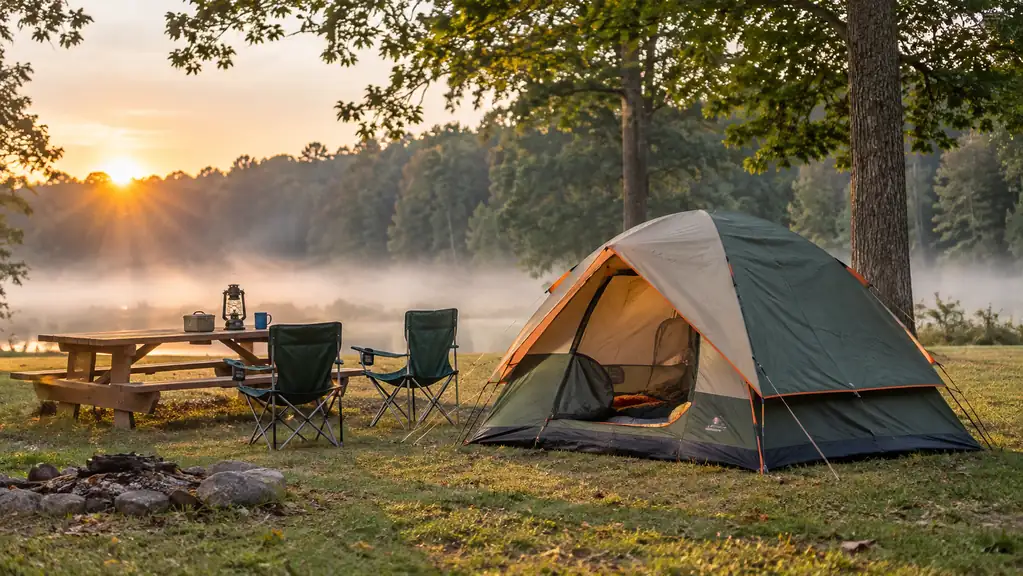
My old tent died in February. Nothing dramatic about it. The zipper quit halfway around the door, I stood in the garage holding a tent I had used for years, and I decided I was finished fighting it. So in the first week of March I bought a Coleman Sundome in the 4-person size, and I have slept in it on about ten camping weekends since, March through October, at state park campgrounds here in north Alabama.
Here is what I am not going to do. I am not going to tell you it is the finest tent ever stitched. What I am going to tell you is what 63 square feet and 10 pounds of tent actually do when two adults sleep in it for a season, including one hard all-night rain in May, and where it left me wishing for something different. That is more useful than a spec sheet, and it is what I would want from a neighbor.
The Quick Verdict
Roomy, simple, and free-standing, and it does everything a weekend car camper asks of it. It is a campground tent, not a mountain tent, and it never pretends otherwise.
Amazon Check Today's Price →For two people, a car, and a bathhouse 200 yards up the road
That is my entire camping life, and this is the tent I bought for it. If yours looks anything like mine, the Sundome is worth a look at today's price.
Amazon Check Today's Price on Amazon →How I've Used It
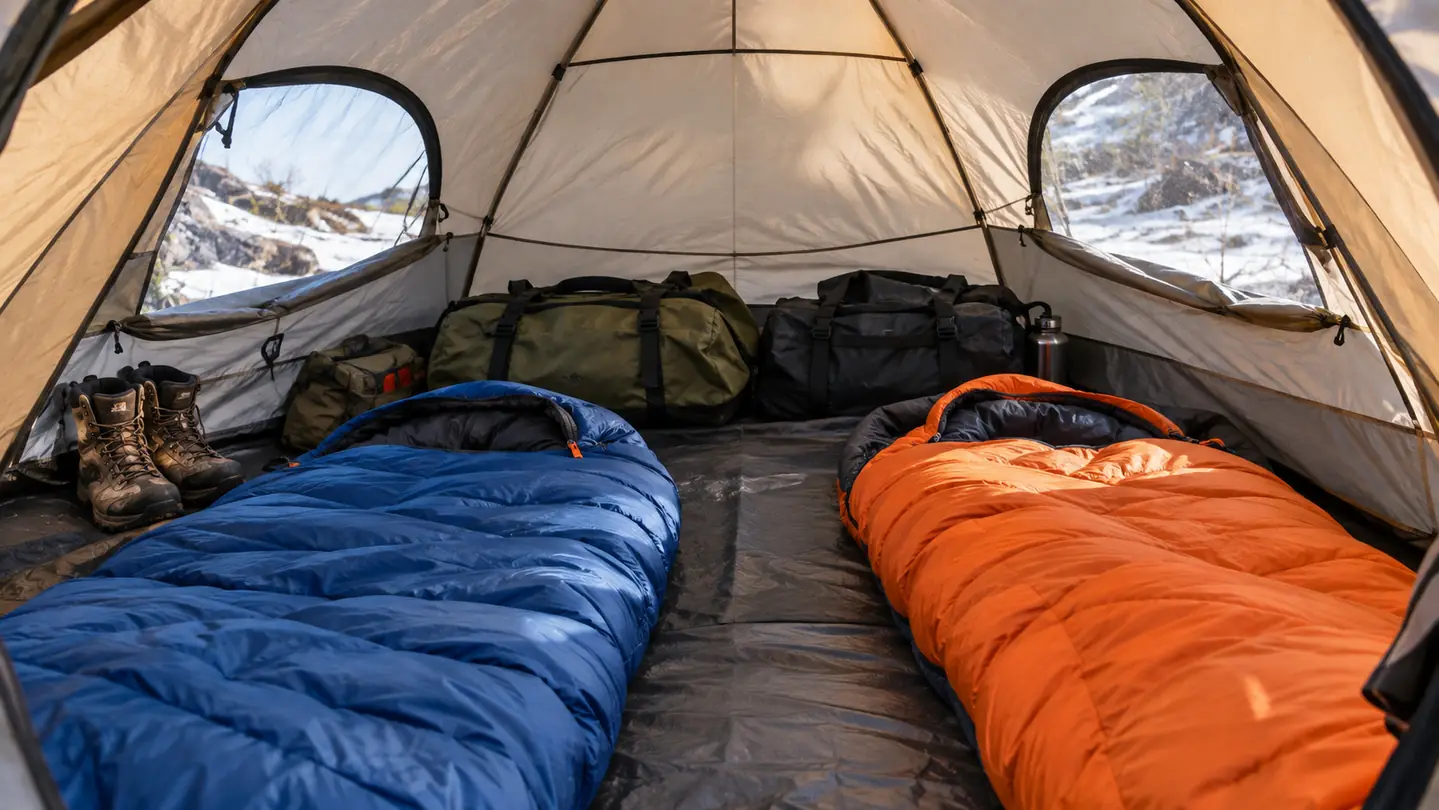
Ray and I camp about ten two-night weekends a season, usually April into October, sometimes starting in March if the weather cooperates. Every one of those this year has been in this tent. Two adults, two sleeping bags, two duffel bags, and a pair of boots by the door. The cooler stays in the car. Ray is 60 and I am 57, and neither of us is crawling around on our knees for fun anymore, so how a tent handles two grown adults matters more to me than how it handles four children.
What it replaced was an old generic tent whose name I could not tell you now. It had a broken zipper and a floor that had gone soft, and I threw it out in February rather than donate a problem to somebody else. I wanted something simple, free-standing, big enough for two people and their bags, and honest about being a campground tent. That is the whole shopping list I walked in with.
Our usual site has a gravel loop road and the bathhouse is about 200 yards up it. That walk is the reason I care about a tent that goes up fast and comes down fast, and about being able to carry it in one trip. Nothing about our camping requires a tent that survives an expedition. Everything about it requires a tent that is easy at 6 a.m. when I want coffee and easy at 9 p.m. when I want to be asleep.
I have pitched it in the backyard, on gravel, on hard-packed dirt, and once on a site that was more red clay than ground. I have pitched it in the dark with a headlamp on. I have taken it down wet in the morning and dried it in the yard when we got home, which is the only maintenance it has asked for. The first pitch took about 30 minutes in the backyard in March, and most of that was me reading the instructions twice and threading a pole wrong. Now I do it alone in about 15 minutes while Ray unloads the car.
The latest we have ever pulled in is a Friday in June, close to eight in the evening, with the light going. Ray held his own light on the site while I threaded poles. Thirty minutes later we were sitting in camp chairs with the tent up and nothing left to do but eat. That is most of the argument for this tent, really. It does not ask anything of you at the end of a long drive.
What 63 Square Feet Actually Fits
The Sundome is listed at 63 square feet of floor area, rectangular, and Coleman rates it for 4 people. I want to be plain about what that means. Four people fit in the way four people fit in a small elevator. Two adults plus gear fit comfortably. Ray and I have our bags along the back wall, boots at the door, and enough room left that neither of us has to climb over the other to get out at 2 a.m.
The ceiling is high enough that I can sit up straight, and I am not a small woman. Getting dressed in the morning is not an athletic event. That sounds like a low bar. If you have spent a season in a tent where it is not true, you know it is not a low bar at all.
I put a sleeping pad down on each side and there is still floor showing between them. That gap is where the flashlights and the water bottles and the book I never read end up. On paper 63 square feet does not sound like much. In practice it is the difference between a tent you tolerate and a tent you are comfortable in.
I measured it once, out of curiosity, because 63 square feet is an abstract number. Laid out on the grass in the yard it is roughly the footprint of a full size bed with a little room left along one side. That is what two adults and two duffel bags feel like in practice, and it matches how the inside of the tent actually feels.
One thing I did not expect to use as much as I do: the rainfly comes off. On a clear night in September, with the fly off and both windows open, I lay there and looked at more sky than I have seen from a tent in years. It is not a stargazing tent by design. It just happens to be one when you take the fly off, and I have come to look forward to those nights.
The May Rain and the 1,500mm Water Resistance
The Sundome is listed at 1,500mm water resistance with the rainfly included, and I can tell you exactly what that got us. One weekend in May it rained hard from about eleven until nearly five. Not a drizzle. The kind of rain that has you lying there listening to it and quietly calculating how wet you are about to be.
We had the rainfly on before we went to bed, because I put it on any night the forecast is remotely doubtful. The inside stayed dry. Not dry-ish. Dry. No drips down the walls, no water in the corners, no damp sleeping bag in the morning. There was a small puddle on the ground outside where the rain had run off the fly, which is exactly what the fly is for.
About two in the morning I got up and checked the corners with the headlamp on its red setting so I would not wake Ray, and I ran my hand along the floor. Dry. The fly had sagged a little with the weight of the water, so I re-set one stake at the front corner, and that was the only thing I did all night. I have been in tents where the answer to that question was not dry.
We dried it in the yard the day after we got home, and it went back in the bag without any fuss. I have not tested it in a wind storm, and I am not going to claim I have. I have not tested it in snow. Coleman calls it a three-season tent and I take that label at face value. If you camp in weather that bends trees, this is not the tent for that weekend, and no amount of extra staking changes it.
Pitching It Alone in About 15 Minutes
The poles go through sleeves rather than clipping to the outside of the frame. Some people hate sleeves and will tell you so at length. I do not mind them, because once the pole is through, the tent is basically up. It is free-standing, so once the frame is together I can pick the whole thing up and slide it two feet to the left when I set it down in a bad spot, which I did the first time.
The first time I tried it, I fed both poles through at once and got them crossed halfway. I pulled them back out, laid the tent flat, and did one pole at a time, front to back, and it has gone that way every pitch since. That mistake cost me ten minutes once. It has saved me ten minutes every time after.
Coleman lists the whole package at 10 pounds including the carry bag, and I carry it from the car to the site in one trip with a sleeping pad under my other arm. That is not a backpacking weight and it is not sold as one. It is a weight that means nothing when the car is 20 feet away and everything else is coming in two more trips anyway.
The Tradeoffs I've Run Into
There is one door. On a wet night, one door means both of you are queuing up in the same spot, and whoever is on the far side of the floor has to cross the whole tent to get out. Not a disaster. Just something I notice at 3 a.m.
Condensation is real on cool nights. Two people breathing in a closed tent will put moisture on the inside walls, and I have wiped the ceiling with a camp towel more than once. The fix is to leave a window cracked, which is fine until it gets cold, and then you pick which discomfort you prefer.
The stakes are basic. I replaced two of them with heavier ones after a windy afternoon on gravel, and I would do that again on the first day if I were starting over. The carry bag works. It is not generous, and getting a wet tent back into it on a gray morning takes some patience and a second pair of hands.
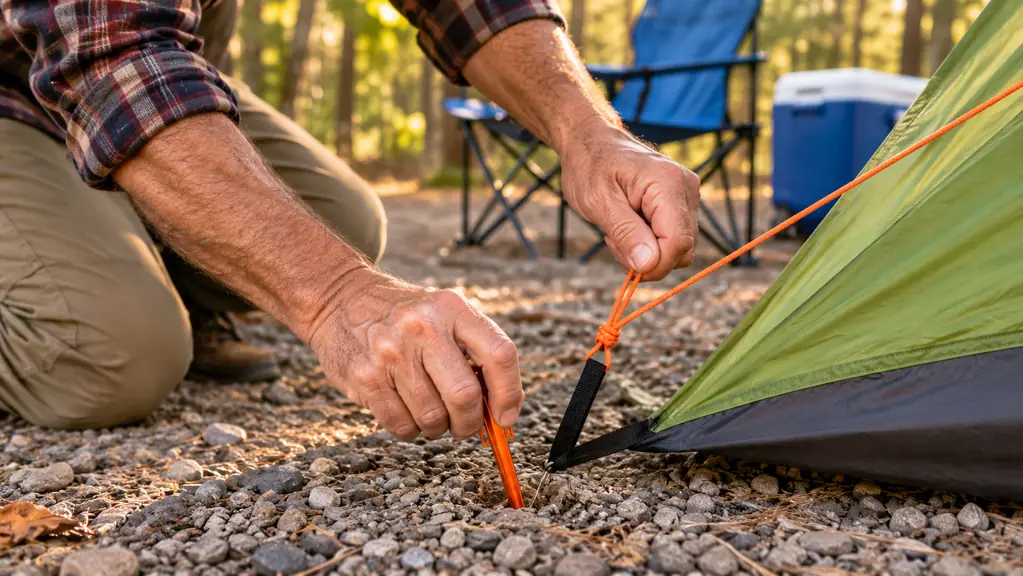
Setting up on gravel takes a little more care than dirt, because a stake will skate before it bites. I walk the perimeter and set the corners first, then the sides, and that has worked on every surface I have tried. On clay after rain the stakes go in easy and come out easy, which sounds nice right up until the wind gets under the fly.
There are two windows, and on a warm night with both open and the fly off, air moves through and it does not turn into a sauna. On a still July night it is still a tent and it is still warm by 8 a.m. It is not an air conditioner and I would rather say so than pretend.
And the honest one. This tent is not going to impress anybody. It is a rectangular dome that looks like a tent, it does what a tent does, and it does not have a feature that makes people walk over to your site and ask about it. At my age I have decided I do not care. I would rather sleep than be asked.
What I Liked
- 63 square feet of floor fits two adults and their gear without a fight
- Stayed dry through one hard all-night rain in May with the rainfly on
- Free-standing, so the whole tent can be picked up and moved once it is up
- Pitches alone in about 15 minutes after the first couple of tries
- Two windows move air on warm nights
- Listed at 10 pounds and carried from the car in one trip
- Simple enough that there is not much on it to break
Where It Falls Short
- One door, which is a traffic jam on a wet night
- Condensation on cool nights with two people inside
- Basic stakes that I replaced
- Not a tent for wind, snow, or weather that bends trees
- Carry bag is tight on a wet morning
The inside stayed dry. Not dry-ish. Dry. No drips down the walls, no water in the corners, no damp sleeping bag in the morning.
Who This Is For
If you camp out of a car at a state park with a bathhouse, this is a sensible tent. If you are two adults who want to sit up in the morning and not climb over each other, it is a good one. If you are a parent with two kids and you want everybody under one roof, it will hold four people, and you will all be very close by morning.
It also suits anyone who is tired of gear with sixteen parts. There is nothing on this tent that needs charging or calibrating or a manual you have to keep in the bag. You put the poles through the sleeves, you stand it up, you stake the corners. That is worth something at my age and probably at yours.
Who Should Skip It
If you are backpacking, skip it. It is listed at 10 pounds and that is not a pack weight. If you camp above treeline, or in weather that actually tests a tent, skip it. If you want two doors, or a vestibule, or a tent you can stand up in, this is not that tent and I would not try to talk you into it.
And if you camp in the cold, be honest with yourself about the three-season label. I have no temperature rating to give you for this tent and I would not trust one if I did. It is a fair-weather and mild-weather tent that handles rain well. That is the entire claim, and it is enough for the way Ray and I camp.
One more thing, because it comes up. If you are shopping for a tent by counting people, count the gear too. Two adults and two bags is a comfortable fit in this one. Four adults is a different evening altogether.
It is not a fancy tent. It is the one I actually used.
Ten weekends, one hard rain, no leaks, and about 15 minutes to put up alone. At today's price that has been a fair trade for me.
Amazon Check Today's Price on Amazon →