
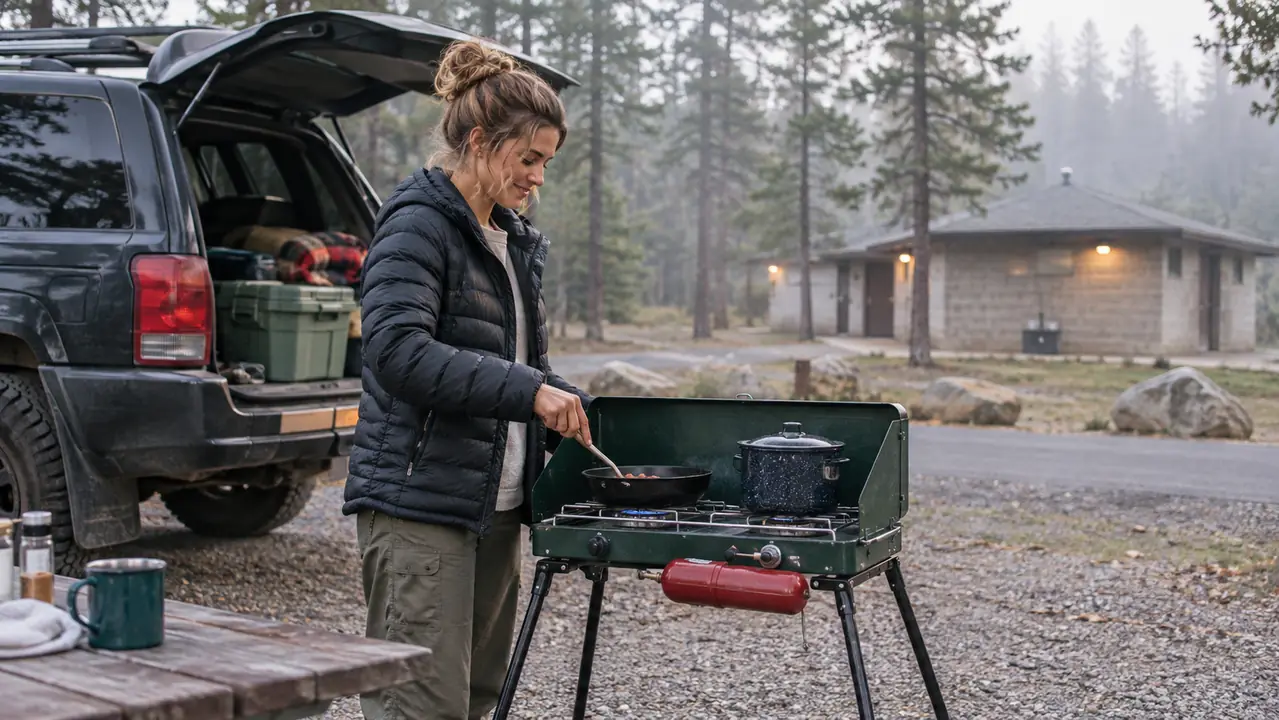
The sign at the campground office said no campfires that weekend. Second weekend in July, county burn ban, a cooler full of bacon and a bundle of firewood already loaded in the back of the CR-V. I read it twice. Ray came up beside me and read it a third time, the way he does, as if the third reading might change the second word.
We had driven up Friday afternoon for one of our two-night weekends, the kind we have done about ten times a season for twenty-five years. I am 57, Ray is 60, and we camp at state parks in north Alabama, where there is a bathhouse, a gravel loop road, and a camp host who knows everybody's business. What we did not have that weekend was a fire. In my experience, no fire usually means no supper unless you have thought ahead.
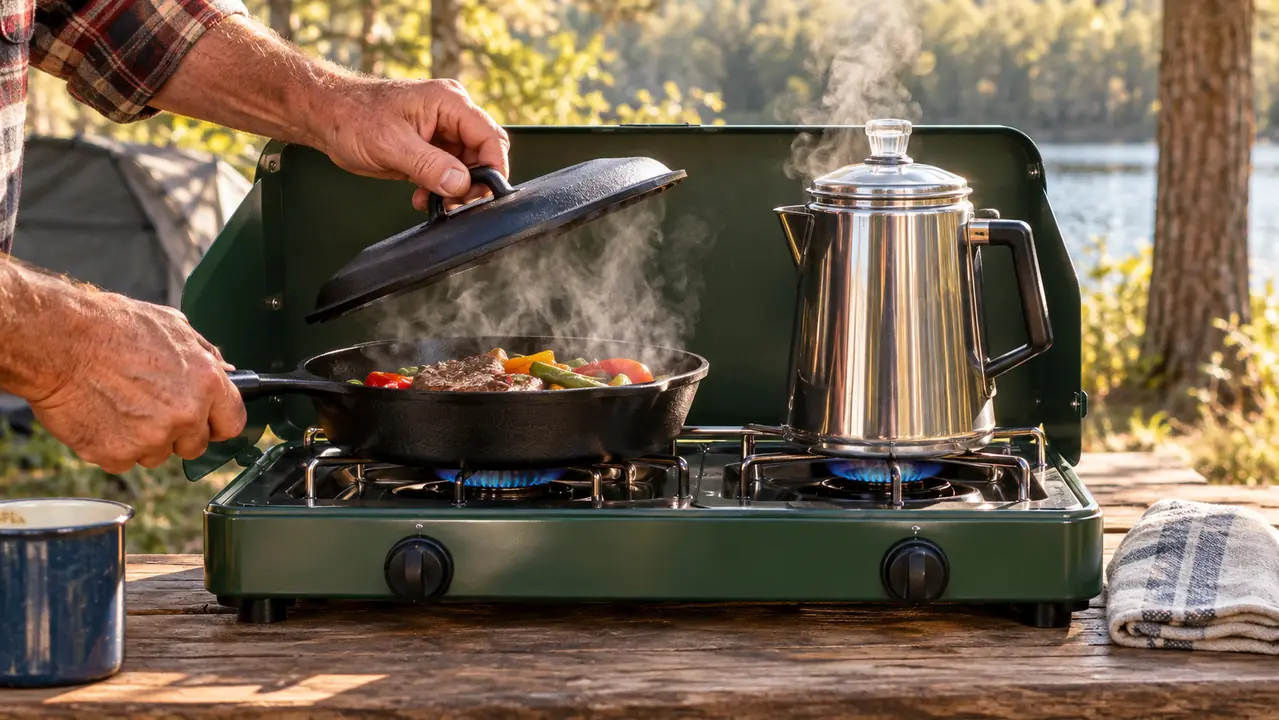
I had thought ahead, though not on purpose. The Camp Chef Explorer 2-Burner had been riding in the back of the CR-V since March along with everything else I own, and I had hauled it out on every camping weekend since. It stands on its own detachable steel legs beside the car, so it does not care whether a picnic table is free or whether the ground is level.
The woman at the campground office was plain about it. Wood and charcoal were out. Propane was fine that weekend. She said it the way you would say the sky is blue, and I wrote it down anyway, because I have learned not to assume. If you take one thing from this story, take this: ask at the office every time. A burn ban is a county decision with a campground rule stacked on top of it, and it can change between Friday and Saturday.
Setting up the Camp Chef takes me a few minutes. The legs come off for travel and pin back on, the three-sided windscreen sits around the burners, and the three foot hose and regulator run from the stove to a standard 20 pound propane tank. I set the tank on the ground behind the stove and kept the whole thing out from under the awning. I cook outdoors with it, always, never in the tent and never inside a closed shelter.
The two cast-aluminum burners put out 30,000 BTUs each, 60,000 together, and the knobs are appliance-style, which is the closest thing to my kitchen range I have found at a campsite. That matters more than the number. I can have coffee going on the left burner at a low simmer and a cast iron skillet heating on the right, and turning one down does not touch the other.
The office did not tell me propane is always allowed. It told me propane was allowed that weekend, at that campground. Those are two different sentences, and only one of them is true.
Supper Still Happens Without a Fire
Two 30,000 BTU cast-aluminum burners, a three-sided windscreen, and a hose that runs to a standard 20 pound tank. Coffee on one side, a skillet on the other.
Amazon Check Today's Price on Amazon →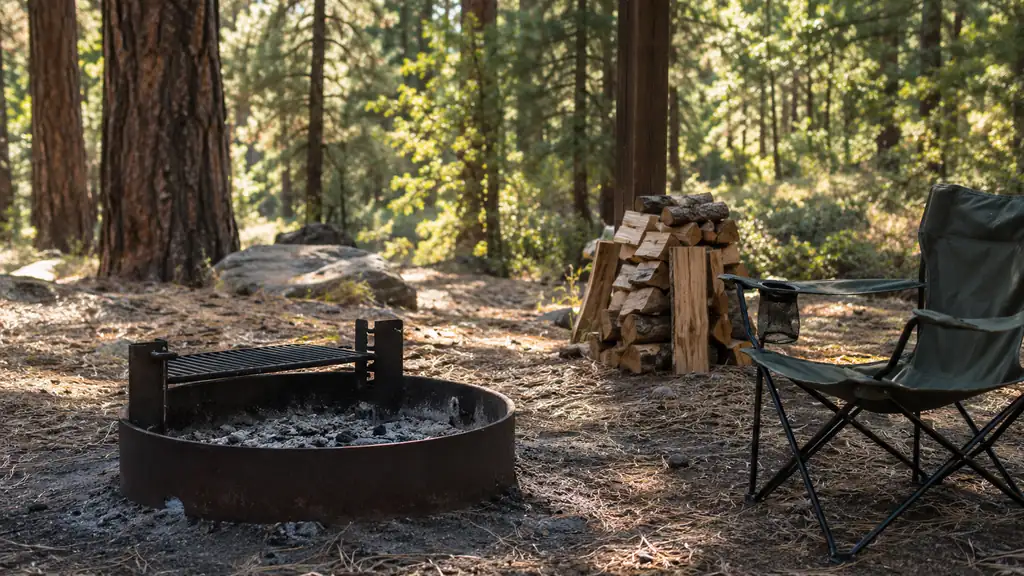
Saturday morning I made bacon, eggs and pan-fried potatoes on it while the light was still gray and the loop road was quiet. A man two sites over walked by with his coffee and asked whether I was allowed to be doing that. I told him what the office had told me and pointed at the sign with the phone number on it. He went and asked. He came back with a griddle and a package of sausage.
The windscreen earned its keep. Saturday had a crosswind coming across the loop, the kind that pushes a flame sideways and makes a liar out of a cooking time. The three steel panels folded around the burners held the heat where I put it. I have cooked on this Camp Chef stove on every camping weekend since March and I have not had a burner go out on me yet.
What it is not is a backpacking stove. With the legs on it measures 34 inches long, 14 inches wide and 29 inches tall, and it lives beside the car, not on my back. If you are hiking in to a site, this is the wrong tool and I will not pretend otherwise. It is also not a fire. It does not give you coals, it does not give you smoke, and it does not give you the thing most of us are actually out there for.
And one more honest note. A propane stove is a cooking appliance, and whether it is allowed is up to whoever runs the campground that weekend. I asked, and I got a yes. I have asked at other campgrounds and gotten a maybe. Do not take my weekend as your permission. Take it as a reason to walk to the office and ask.
What I'd Tell You If We Were Sitting at My Kitchen Table
If we were sitting at my kitchen table and you asked me whether to buy it, here is what I would say. If you car camp, if you cook real food instead of pouring hot water into a bag, and if you have ever had a weekend where the fire was off or the wood was wet, this earns its space in the vehicle. The Camp Chef Explorer has detachable steel legs, a three-sided windscreen, a three foot hose and regulator for a standard 20 pound tank, two 30,000 BTU cast-aluminum burners, appliance-style knobs, and a one year limited warranty. It fits the 14 inch Camp Chef accessories if you want to add a griddle later, though I have not bought one myself and cannot vouch for it. If you backpack, skip it. If what you want is a fire, this is not a fire. But if what you want is supper, it does that part every time.
The Stove That Rode Along All Season
Ten camping weekends, one 20 pound tank at a time, coffee on one burner and a skillet on the other. Ask at the campground office first, then cook.
Amazon Check Today's Price on Amazon →