
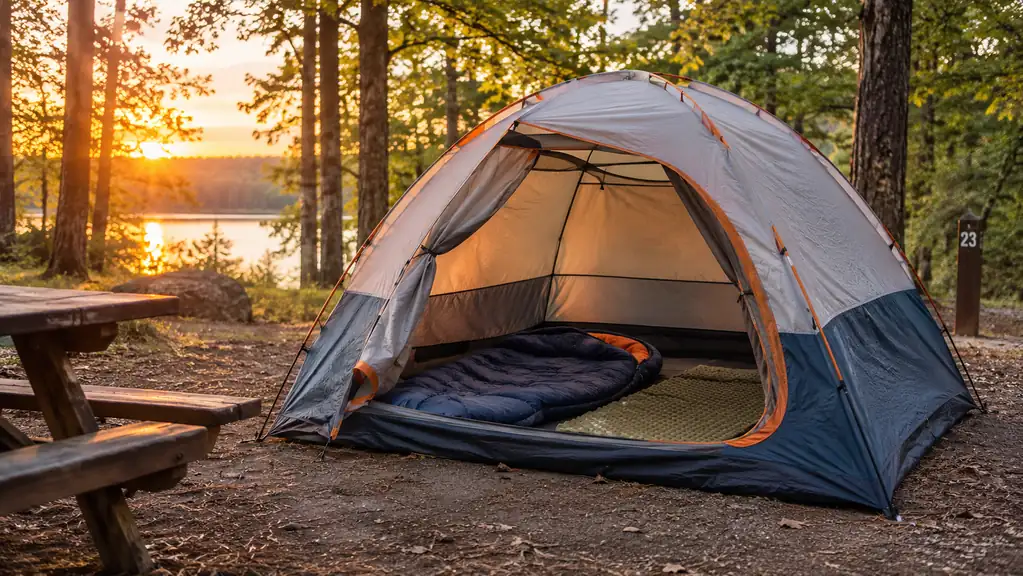
I have slept on the Therm-a-Rest Z Lite Sol for one full season now, about ten two-night weekends at state park campgrounds in north Alabama, and it has been the only pad under me for every one of them. I have never owned the Trail Scout. Everything I know about that pad comes from twenty minutes with one in a store aisle and from a neighbor at the campground who let me press down on his. The Z Lite Sol I can talk about from my own tent floor, which is the only place a gear opinion is worth much.
Here is the short answer. The Z Lite Sol is for the camper who wants to unfold a pad and be done, and who never wants to think about a leak at two in the morning. The Trail Scout is for the camper who cannot get comfortable on a thin sheet of foam and will gladly carry more bulk to fix it. Those are two different people. I am the first one, but I have camped next to the second and I understand him.
| Therm-a-Rest Z Lite Sol | Therm-a-Rest Trail Scout | |
|---|---|---|
| Cushioning | Three quarters of an inch of closed-cell foam. Firm, thin, and you feel the ground through it. | A foam core inside a fabric shell that gives under a hip or a shoulder. Noticeably softer to lie on. |
| Weight and packed size | 14 ounces, folds to about 20 by 5 by 5.5 inches, straps to the outside of a pack or lies flat in the car. | Rolls up larger and carries more weight for the same full length. It wants real room in a pack. |
| Setup at camp | Unfold it. That is the entire job. | Open the valve, let the foam pull air in, then add a few breaths to firm it up. |
| Puncture risk | No air chamber to lose. A sharp stick can nick the surface and it still insulates. | An air chamber inside a shell, so a thorn, a stray ember or a bad seam can end the night. |
| Warmth for the weight | Reflective ThermaCapture coating and heat-trapping dimples, listed at 20 percent more warmth, at 14 ounces. | More foam between you and the cold ground, at more weight and more bulk. |
| Sleeping on rocky, rooty ground | A root or a rock makes itself known by morning. | The extra give forgives a lumpy site. |
| Best for | Weekend car campers who want zero fuss and a pad that cannot go flat. | Side sleepers and anyone who will trade pack space for cushion. |
How I Ended Up Sleeping on Foam
For a long while my pad was a generic air mattress, the kind you blow up with your lungs and regret by morning. It went flat overnight on a regular basis. I kept a patch kit in the tent pocket and used it more than I used the pad. I would wake on the tent floor with my hips aching and my back stiff, and I would spend ten minutes hunting for the leak with a flashlight while Ray pretended to sleep. Twice I gave up and slept on a folded blanket laid over the deflated thing. The last straw came on a cool night in February, when I got up at four in the morning, walked to the bathhouse, came back, and decided I was finished with it. That afternoon I put the mattress in the trash. When I replaced it in the first week of March, I was not shopping for comfort. I was shopping for something that could not fail on me in the dark, and that led me to closed-cell foam.
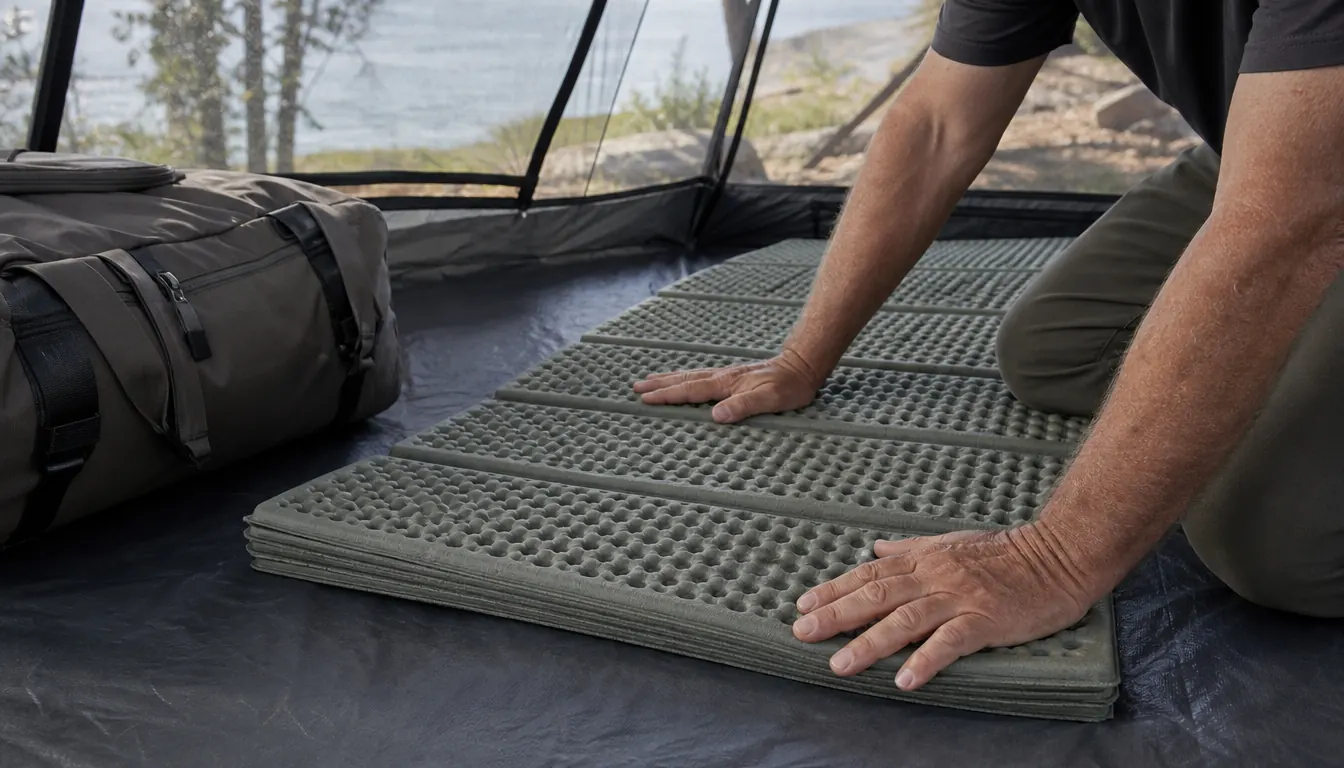
The Z Lite Sol is a molded foam pad, 72 inches long, 20 inches wide, three quarters of an inch thick, and 14 ounces on the scale. It folds down to roughly 20 by 5 by 5.5 inches. There is no valve, no pump, no patch kit, and no air inside it to escape. I laid it on the tent floor the first weekend of March and it has been in the same spot every weekend since. Ray uses his own pad and does not care to discuss it, so I will leave his out of this.
Where the Therm-a-Rest Z Lite Sol Wins
The number I keep coming back to is 14 ounces. I am not a backpacker, so weight was not why I bought it, but I have come to appreciate it. It folds into a block of about 20 by 5 by 5.5 inches that straps to the outside of a day pack or lies flat in the back of the CR-V without eating the room a rolled pad eats. The first weekend in March I packed the car myself, and I remember standing in the driveway holding it in one hand and the cooler in the other, deciding it could ride on top of the duffel. It has ridden there every weekend since. On ten weekends it has never once had me chasing it around a tent or hunting a valve cap in the dark with a headlamp, and I have stepped over it on the way back from the bathhouse more than once without a stumble.
The bigger win is that it cannot deflate. Closed-cell foam has no air chamber, so a sharp stick on the tent floor does not end your night, it just nicks the surface. The listing calls the pad water resistant, and that matches what I have seen. On the May weekend it rained all night, and the air in the tent was damp by morning. I wiped the pad down with a hand towel, and it was dry enough to fold up and put in the car before breakfast. Try that with a pad full of air and a wet shell. If you have ever woken at three in the morning on the ground with a flat pad under you, you know why that matters and you know what you would give to never repeat it.
Warmth is where I have to be careful with you. The listing says the reflective ThermaCapture coating and the heat-trapping dimples increase overall warmth by 20 percent. I am not going to hand you a temperature rating, because the listing does not give one and I have not slept on this pad in real cold. What I can tell you is that I slept on it from March through October in Alabama and I never once got up cold off the ground. The October weekends were the ones I noticed it most, when the ground holds a chill all night and a thin pad has to earn its keep. Those dimples are not decoration. They are the part that traps the heat, and you can feel the difference under a bare hand.
Where the Trail Scout Wins
Now the other side of it, because the Trail Scout is not a bad pad and I am not going to pretend it is. A self-inflating pad is a foam core inside a fabric shell. You open the valve, the foam pulls air in on its own, and then a few breaths firm it up. What that buys you is give. When I pressed my hip into our neighbor's pad at the campground, it moved. Mine does not move. That is the whole difference in one sentence, and if you are a side sleeper, that sentence is the one that decides it.
On a smooth tent floor a thin pad is fine. On a site where you can feel a root through the floor, it is not. The Trail Scout forgives a lumpy site in a way that three quarters of an inch of foam simply cannot. If you sleep on your side, or if a shoulder complains by morning, that cushion is worth more than the weight you save by leaving it home. I would rather be honest about that than sell you the pad I happen to own.
The trade is fuss and risk. You have a valve to open and a few breaths to add, and if you forget the valve the pad does not do its job. I opened the valve on the floor model at the outfitter in town and stood there waiting, and it did take a minute or more to pull its own shape before it was worth lying down on. You have an air chamber that a thorn or a stray ember can end. And you have a pad that rolls up larger and heavier than mine. None of that is a deal breaker if comfort is the thing that keeps you camping. All of it is a deal breaker if what you want is to unfold a pad and go to sleep.
The Pad That Cannot Go Flat at Two in the Morning
Closed-cell foam, 14 ounces, 72 by 20 inches, folds to about 20 by 5 by 5.5 inches, and nothing to inflate when you are tired. It has been under me for ten weekends and it will be under me for the next ten.
Amazon Check Today's Price on Amazon →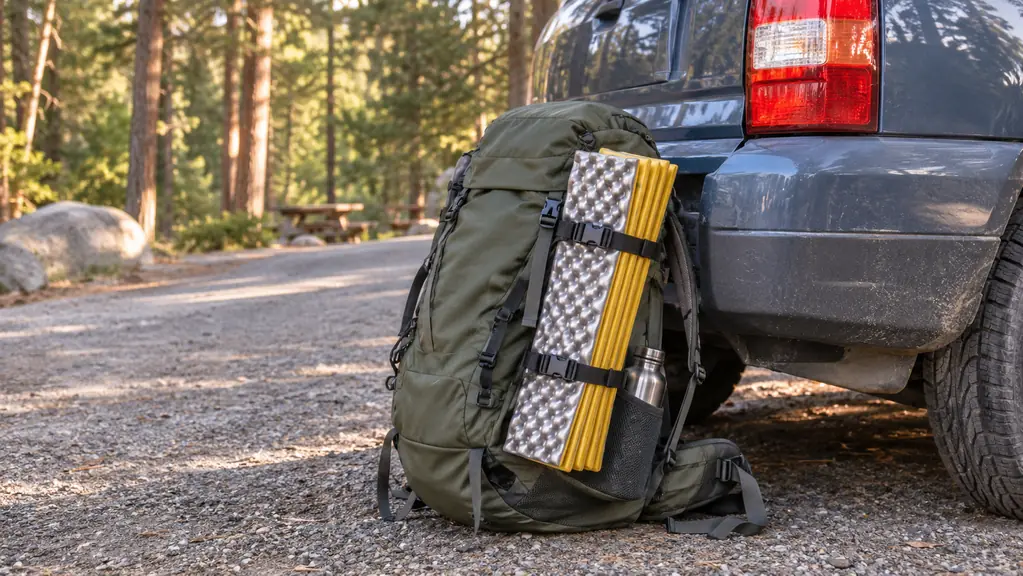
What Eight Months on the Z Lite Sol Actually Felt Like
I will not oversell it. This pad is firm and it is thin, and for the first two nights I noticed both. By the third weekend I had stopped noticing, which is the highest compliment I can pay a piece of gear. My lower back is stiff in the mornings no matter what I sleep on, and I am not going to tell you a pad fixed that, because it did not. What I can tell you is that I stopped waking up on the ground, and that alone changed how my mornings went. On the June weekend I got up before Ray, walked the 200 yards to the bathhouse on the gravel loop road, came back, and made coffee on the stove without once thinking about the pad. That is what I wanted from it, and that is what I got.
The routine is nothing. I check the ground under the tent before I lay the pad down, and I keep the pad inside the tent instead of out. That is the whole system. No inflating, no deflating, no fighting it into a stuff sack in the rain. It folds to a block, straps shut, and goes in the car beside the stove. When I pack up on Sunday morning I fold it in four moves, the same four moves every time, and it goes on top of the duffel. In eight months I have not had a single night where the pad was the reason I was awake.
Fourteen ounces, no valve, no patch kit, and not one flat night in ten weekends. That is the whole case for the Z Lite Sol.
What I Liked
- Nothing to inflate, so nothing to go flat while you sleep
- 14 ounces and folds to about 20 by 5 by 5.5 inches, which straps outside a pack
- Reflective ThermaCapture coating and heat-trapping dimples, listed at 20 percent more warmth
- Water resistant closed-cell foam wipes clean on a damp tent floor
- 72 inches long and 20 inches wide, full length for a tall sleeper
Where It Falls Short
- Three quarters of an inch thick, and a root comes right through it
- Folds to a bulky block that does not compress the way an air pad does
- Firm, with no give at the hip or the shoulder
- Not the pad for a side sleeper who needs cushion
What I Would Tell You Standing in the Store Aisle
Do not buy either pad on a review alone, mine included. Get your hands on them. A self-inflating pad can be opened right there on the floor, and you can put a hip on it and see whether the give is what your back has been missing. A closed-cell foam pad you can press with a thumb and know in three seconds whether it is too firm for you. Our neighbor let me poke at his Trail Scout for two minutes at the campground in April, and two minutes was enough for me to know it was not my pad. I did not need a night on it. I needed to feel whether my hip sank, and it did, and I knew.
What I would not do is buy a cheap air mattress instead, which is where I started. It cost me more mornings than it saved me money. Whatever you choose, choose something that will still be holding you up at four in the morning, because that is the hour when you find out what your gear is actually made of.
Who Should Buy Which
Buy the Z Lite Sol if you car camp, if you want a pad that cannot fail on you, and if a firm, thin surface does not bother you. Buy it if you have ever been woken by a flat mattress on the tent floor. Buy it if you would rather spend your evening at the campground cooking bacon and eggs on the stove than inflating something in the dark. And buy it if you want a pad you can toss in the back of the car and forget about until bedtime. I am 57 and I am not looking for a project at nine at night after a six mile day hike. I want to unroll the pad, unroll the bag, and be done.
Buy the Trail Scout if you are a side sleeper, if you camp on ground that is more rock than dirt, or if you have tried plain foam and could not get to sleep on it. Try one before you commit if there is any way to. The extra give is real, the extra breath or two at camp is real, and the bulk is real. Only you can say which of those three you will notice most at two in the morning.
Zero Fuss, Ten Weekends, No Leaks
If you want a pad with nothing to inflate, nothing to patch, and nothing to think about after you unroll it, the Therm-a-Rest Z Lite Sol is the one I keep coming back to. Today's price is one click away.
Amazon See Today's Price on Amazon →