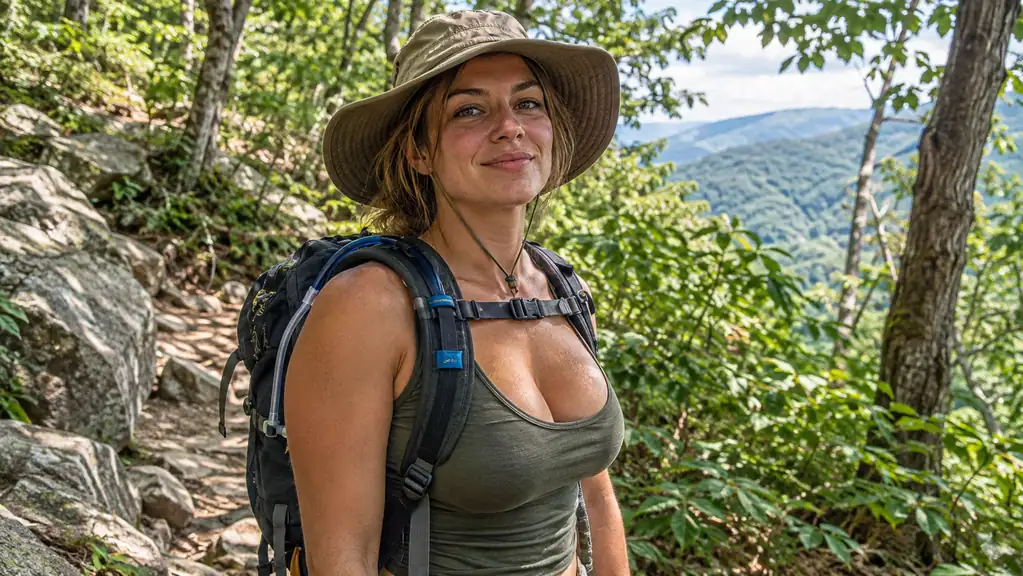
By the second week of June, a three-mile loop on the ridge here stops being a walk and turns into arithmetic. The air is thick by nine in the morning, the limestone holds the heat like a brick oven, and somewhere past the first mile I start doing math about what is left in my water and how far it still has to stretch. I have hiked these southern Appalachian foothills for about twenty-five years. The summers have not gotten easier, and I have quit pretending they will.
What changed for me was not a bigger bottle. It was moving the water onto my back and then changing how I drink it. I carry the Teton Sports Oasis hydration pack, an 18-liter daypack with a 2-liter bladder, on my weekly hikes from March through October. Before that I used a small generic backpack and a bottle I had to stop, unzip, and dig for. I drank less than I should have, purely because stopping was a nuisance. That is the honest reason I switched, and it is why the steps below are mostly about removing friction instead of about willpower.
Two liters on your back beats a bottle you have to dig for
The Teton Sports Oasis holds a 2-liter bladder inside an 18-liter daypack, two pounds empty, with a wide 2-inch opening that makes adding ice and cleaning easy. Weather-guarded zippers, a utility pocket, and a rainfly in the box. Limited lifetime warranty.
Amazon Check Today's Price on Amazon →Five Steps I Take Before a Hot-Day Hike
Step 1: Start the night before, not at the trailhead
The hike I feel worst on is the one I started already behind. A mug of coffee and a slice of toast at six in the morning does not cover a two-hour drive and a three-mile climb in July. So I drink a full glass of water with supper, another one while I load the car, and I keep a bottle in the cupholder on the drive up. Ray laughs at me for it. He also stops twice on the climb, so I let him laugh.
Food matters too, and not in any fancy way. I eat something with salt in it before we leave the house, crackers and a little cheese, or a leftover biscuit with bacon. On the hotter days I tuck a salty snack into the pack before I zip it. What I stopped doing is drinking sweet tea all morning and calling it hydration. All that sugar and no water is how I used to end up with a headache by noon on hikes I blamed on the heat. I learned that one on a July hike a few years back, four miles into a loop with a headache building behind my eyes and nothing in the pack but a sleeve of crackers and a bottle that had gone warm by the second mile. I sat on a rock in the shade for twenty minutes and finished what water I had left, then walked out slow. Nothing dramatic happened, and it still cost me the whole afternoon.
One thing I quit doing is a big glass of water right before I put the pack on. That just means I am looking for a tree twenty minutes up the trail. Small and steady beats one big pour, every time.
Step 2: Fill the bladder with ice and water before you leave the car
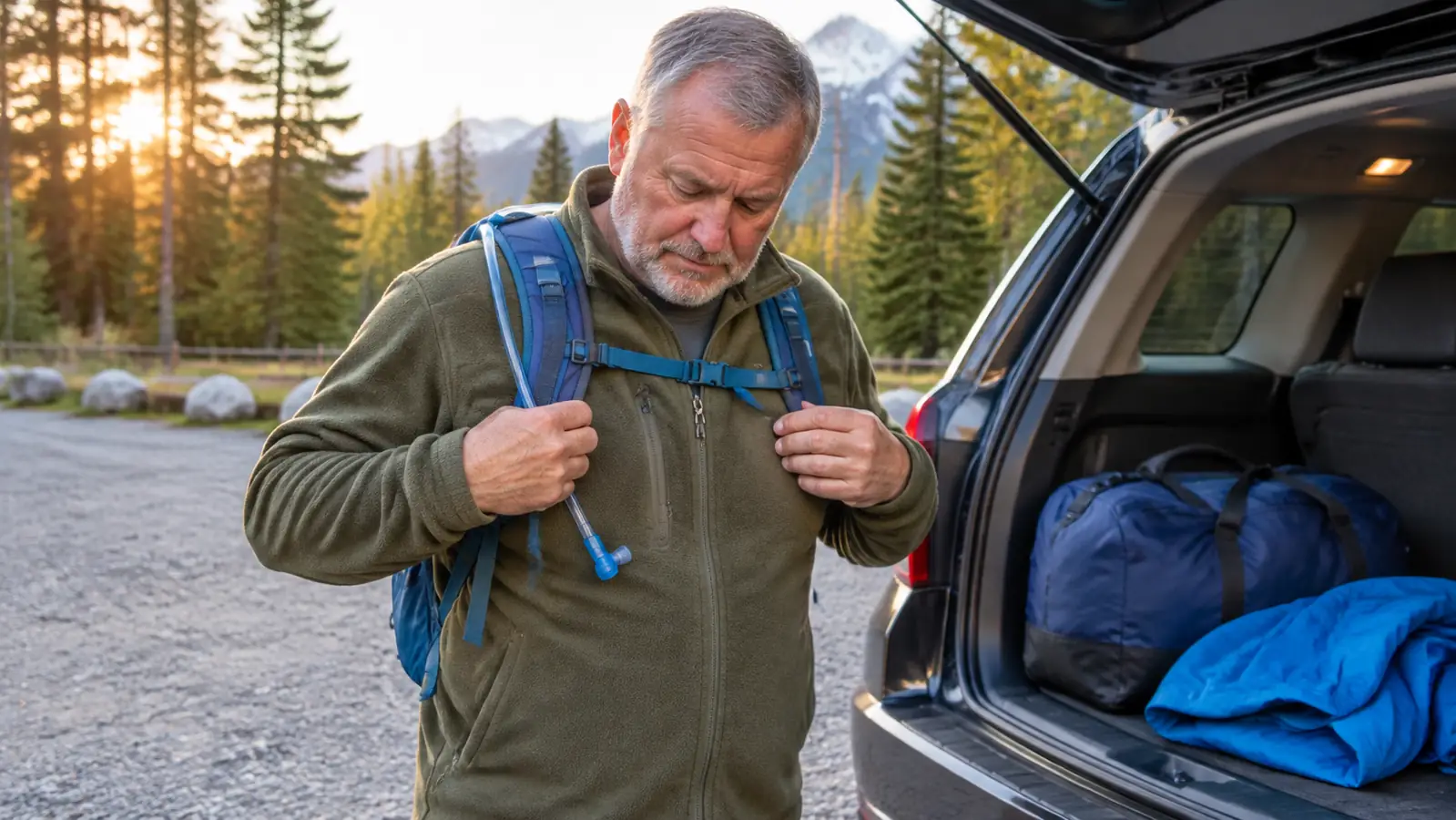
The bladder on the Teton Oasis holds 2 liters, and the opening is a wide 2 inches across, wide enough that ice cubes go in without a fight. I fill it in the kitchen before we leave, not at the trailhead, and I top it off with ice. That wide mouth is the most useful thing about the pack for Alabama in July, because cleaning a bladder with a narrow neck is the reason a lot of people give up on bladders entirely.
Cold water gets drunk. Warm water sits there. I have proven this to myself on the same three-mile loop more than once. The hikes where I skipped the ice are the hikes I came home with water still in the pack, which means I under-drank and spent the afternoon on the couch with a fan pointed at me. Ice is not a luxury in this heat. It is the difference between a habit and a good intention.
My first attempt at a fix was the obvious one. I bought a bigger bottle, froze half of it the night before, and dropped it in the side pocket of my old pack. It sweated through the pocket, knocked against my hip for three miles, and I still had to stop and unscrew a cap every time I wanted a drink. The ice was a good idea in a bad container. That is when I started looking at a bladder instead of a bottle.
Do not count on a spring or a creek to top you up. I have hiked enough of these ridges to know that the seep I remember from March is a dry rock shelf by August, and treating a mud puddle as a water source is how a nice morning becomes a bad week. Carry what you need from the start. Two liters rides inside an 18-liter pack with room left for a rainfly, a layer, and my keys.
Step 3: Fit the pack so your shoulders are not the whole story
The Oasis is a low-profile cut with full adjustability, and the shoulder straps run out or take up as needed. The first few hikes I wore it loose, because I was used to a floppy daypack, and by mile two my shoulders ached and I blamed the pack. Then I tightened it down the way the fit is meant to be worn and the weight sat still instead of bouncing. Same pack, different hike.
The adjustment itself takes about ten seconds. I loosen the shoulder straps all the way, put the pack on, then pull them down evenly until the pack sits flat against my back and stops swinging when I turn to look behind me. The first time I did it right the pack felt heavier, which sounds backwards, but it was not heavier. The weight had just stopped moving around.
It weighs 2 pounds empty and measures 10 inches wide by 18.5 inches tall, small enough that I forget it is on and roomy enough that I am not stuffing a jacket under a strap. The body is 210D polyester honeycomb ripstop. I am not a gear tester and I cannot tell you what that weave means in a lab, but I can tell you that eight months of shoving it under the seat of the CR-V and dragging it across rock has not opened a seam.
The weather-guarded zippers matter more than I expected. I keep my phone and the car keys in the utility pocket, and the guards keep grit out of the teeth so the zipper still runs after a dusty trail. The cut is built to fit men, women, and youth, and Ray has worn it on a short walk without complaint, which is the closest thing to a second opinion I can give you.
Two liters is not a lot of water. It is enough for four miles in July only if you sip it instead of gulping it at the car.
Step 4: Sip on a clock, not on thirst
Thirst is a lagging indicator. By the time I feel thirsty on a humid morning, I am already behind and I will spend the rest of the hike trying to catch up. So I drink on a clock. A few swallows every twenty minutes, whether I want them or not, and more on the climbs. I use the timer on my phone, which also reminds me that I brought a phone and not just a bag of water.
This is the whole reason the Teton Oasis earns its place on my back. I can drink without breaking stride and without taking the pack off, so the twenty-minute rule actually happens. With the old bottle I would tell myself I would drink at the next flat spot, and the next flat spot was always a half mile further. The pack removes the excuse, and removing the excuse is most of the work.
I do a three-mile loop most Wednesday mornings and it has three climbs in it. I drink on the flats and I drink on the climbs, and I let the descents alone because that is when I am breathing easy and forgetful. By the second climb on a July morning I can feel whether I have kept up with it or been lying to myself. The pack never argues with me, which is more than I can say for my own judgment.
Here is my rough accounting on a hot day. Two liters, sipped steadily, gets me through a four-mile loop with a little left over. If I come back with a liter still in the bladder in July, I under-drank and I feel it that evening. If I run it dry at mile three, I went out too fast or planned too short. Either way the bladder tells me the truth at the end of the hike, which a bottle rolling around in the bottom of a pack never did.
Step 5: Turn around on water, not on mileage
The turn-around decision is where most hot-day trouble starts. The map says the overlook is another mile and a half. The map does not know how much water is in my pack. My rule is simple: half the water goes on the way out, half comes home. If I am at the halfway point of my mileage and more than half the bladder is gone, I turn around there, overlook or no overlook.
That rule has cost me a couple of ridge-top views over the years and I do not regret either one. The ridge will be there in October. Heat piles up in a way that mileage does not, and the last mile back to the car is always longer than the first mile out, especially once the shade gives out and the rock starts throwing heat back at your legs.
One more thing about the walk out. Do not pour the last of the water over your head at the car and call it finished. Drink what is left before you drive, because the ride home in a hot car is still part of the day, and I have climbed out of the CR-V at the house feeling worse than I did on the trail.
What Else Helps
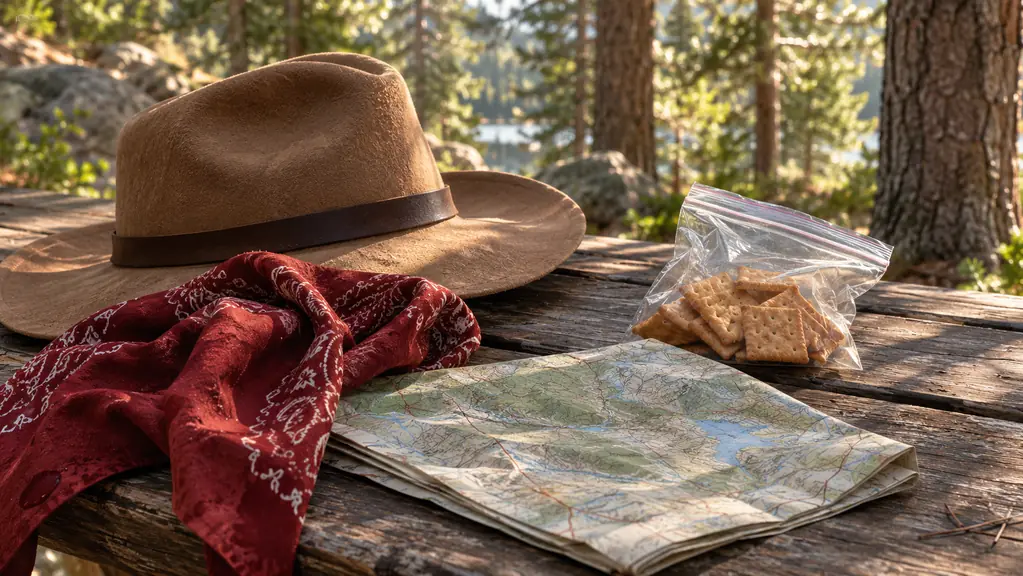
A hat and a little shade do more than people give them credit for. I wear a wide brim, and I plan the route so the climbing happens in the morning and the exposed rock is behind me by eleven. On the still, hazy days I carry a bandana, wet it at the start, and tie it around my neck. It is not a substitute for water. It just makes the first two miles less of a slog.
My usual route has a mile of open rock right after the first climb, and that mile is where the day gets decided. If I hit it before ten, I am fine. If I hit it at noon, no amount of water in the pack makes it pleasant. So I move my start time earlier in July and August, and I stopped feeling like that was a compromise.
Electrolytes are worth a thought on the long, sweaty days. I am not a chemist and I am not going to tell you a powder will fix a hot afternoon. What I do is bring a small bottle of salted water or a sports drink alongside the bladder on hikes over four miles, and I drink it at the turn-around. If you take medication or have been told to watch your salt, that is a conversation for your doctor, not for me.
Then there is the care of the bladder, which nobody mentions and everybody should. I rinse it and hang it open to dry after every single hike, and I never put it away damp. That one habit is why mine still smells like nothing after a full season of weekly use. The rainfly lives in the pack and came out exactly once, on a June hike that turned ugly at the top. The pack carries a limited lifetime warranty, which I have not needed yet.
The pack that made me stop rationing water
18 liters of organized storage, a 2-liter bladder with a wide 2-inch opening for ice, weather-guarded zippers, and a rainfly included. Two pounds empty. If you hike in the heat, this is the version of the habit that sticks.
Amazon Check Today's Price on Amazon →