
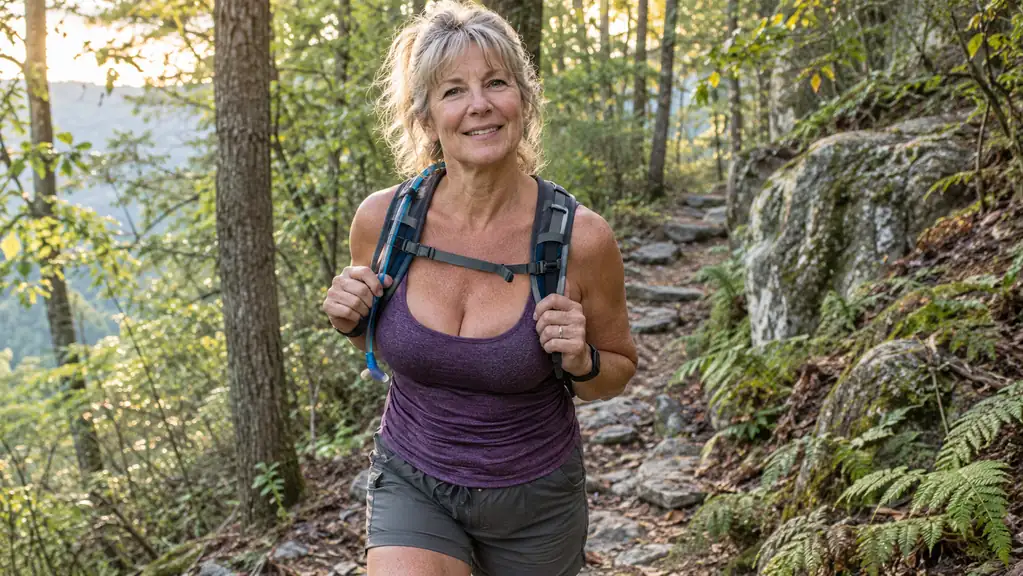
Digging for a water bottle is what finally did it. Not the heat, not the climb, and not the twenty-five years I spent telling myself a plain daypack was good enough. It was the fourth stop on a five-mile loop in the foothills, standing in the middle of the trail with the pack swung off one shoulder, unzipping a front pocket, moving a rain jacket and a bag of almonds out of the way, and pulling out a bottle that had gone warm somewhere around mile two. Then doing the whole thing in reverse to put it back. I day hike three to six miles most weeks from March into October, and I had been carrying water like a tourist the entire time.
So in the first week of March I bought the Teton Sports Oasis Hydration Pack. Eight months later, after a full season of weekly hikes and a string of car-camping weekends at state parks here in north Alabama, I have a fair amount to say. Some of it is praise. Some of it is the kind of thing I wish somebody had told me before I filled a bladder for the first time and got water down the front of my shirt. The short version is this: the Teton Sports Oasis fixed the problem I bought it for, and it taught me two things about how I actually hike.
The Quick Verdict
Two liters on my back and eighteen liters of storage ended my bottle-digging days. It rides light, the zippers keep weather out, and the bladder rinses clean in about a minute. It is a day pack and it is honest about that.
Amazon Check Today's Price →Two liters on your back, both hands free on the trail
If you are still swinging a daypack off one shoulder to reach a warm bottle, this is the fix I found. The Teton Sports Oasis carries two liters in the bladder and eighteen liters in the pack, and I have hiked a whole season in it.
Amazon Check Today's Price on Amazon →How I've Used It
My season runs March to October. Most weeks that means a three to six mile day hike close to home, and about ten weekends a season Ray and I drive to a state park, set up at a site with a bathhouse, and walk the loop trails out from camp in the mornings. The Oasis went on every one of those hikes. It is my only hiking pack, and I have not carried it on an overnight trip, because we do not backpack. That is worth saying up front, since a day pack used on day hikes is the only thing I can honestly review.
The first hike with it was a four-mile out-and-back in early March, cool enough that I did not think much about water, which turned out to be a good test of everything else: how the straps sat, whether the load shifted, whether I noticed I was wearing it at all. I noticed the weight of the pack itself, about two pounds empty, and then I stopped noticing it somewhere in the second mile. That is what I want from a day pack.
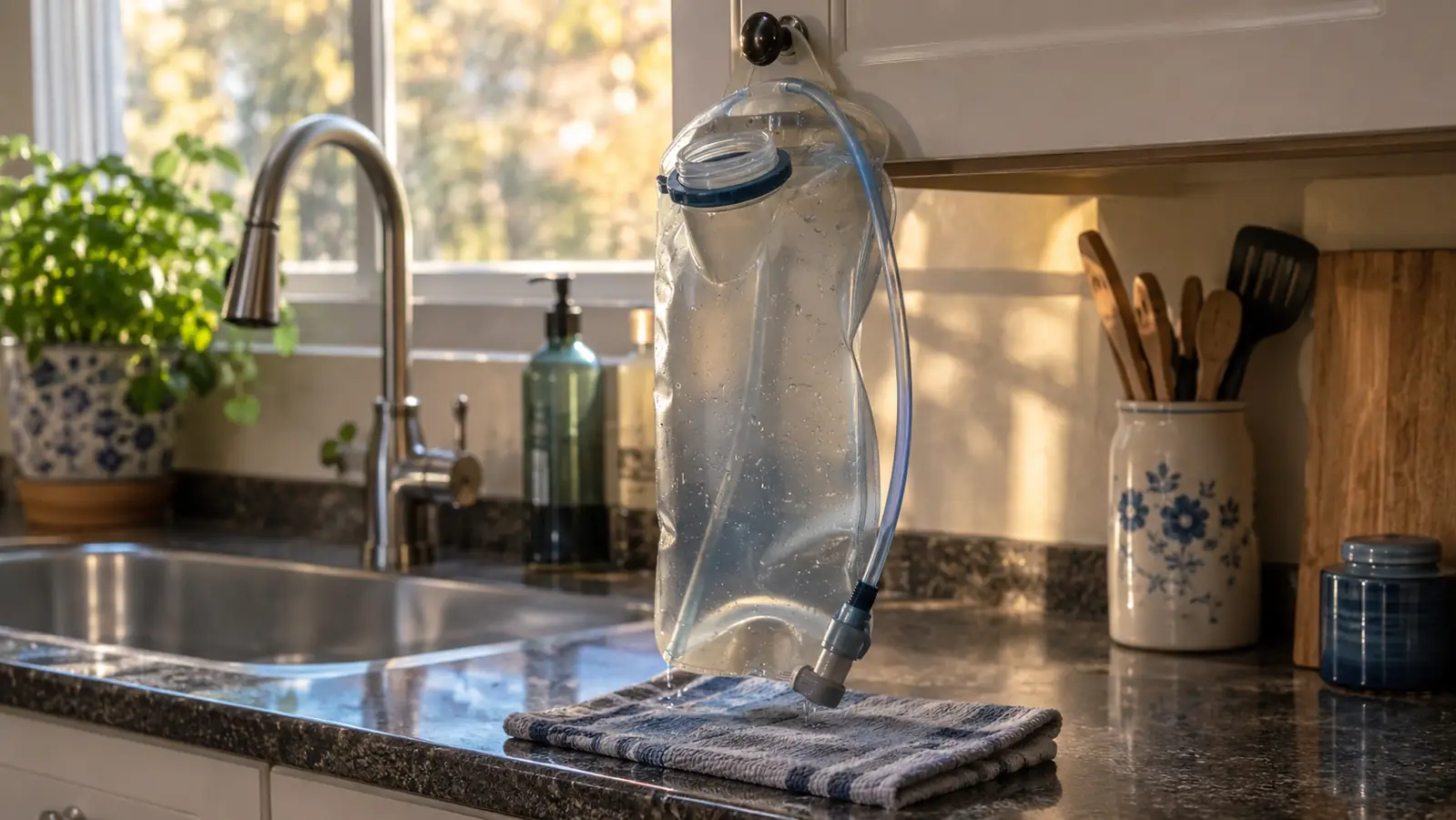
By June I had the routine down. Ice and water in the bladder before I leave the house, a light jacket and my lunch in the main compartment, keys and phone in the utility pocket, and a small first aid kit I have carried for years. I rinse the bladder and hang it over the faucet after every single hike. That is not a chore I enjoy, but it takes about a minute, and it is the reason the bladder still tastes like water in October instead of like a plastic bag.
One hike sticks in my mind as the real test, a five-mile loop on a Saturday in the middle of July, starting at nine in the morning with the temperature already in the high eighties. I filled the bladder with ice and water at the kitchen sink, and by the time I finished the climb out of the first hollow the outside of the pack was damp with condensation and the water coming through the tube was still cold. I drank more that morning than I ever did carrying a bottle, because there was nothing to it. Reach back, take the tube, drink, let it go. I finished the two liters about a quarter mile from the car, which is close to perfect. I would rather run out at the end than pour half of it out in the parking lot.
What Eighteen Liters Actually Holds
Eighteen liters sounds like a lot until you start filling it. Here is what goes in mine on a warm-weather hike: the two-liter bladder, a sandwich and an apple, a light rain shell, the small first aid kit, my phone, keys, a bandana, and a folded paper map I still carry even though I have walked these trails for years. There is room left over, and nothing shifts around, because the storage is split into pockets instead of one big sack.
Cooler weather is the honest test. In late October I add a fleece and a pair of gloves, and the pack gets tight. Not impossible, tight. If you carry a serious camera or a full change of clothes on a day hike, eighteen liters will feel small and you should look at something bigger. For a lunch, a layer, water, and the small stuff, it is the right size, and it is the size that keeps me from loading it until it weighs twelve pounds.
I tried to make it into something bigger in April and it did not work. I had it in my head that I could carry my camera, a small tripod, and a folding stool for a longer day, and I got all of it in there, but the pack sat wrong on my shoulders and I felt every step of a four-mile walk. I took the stool out at the trailhead and left it in the CR-V, and the rest of the hike was fine. What I learned is that eighteen liters is a real limit and not a suggestion. Once the pack gets past about ten pounds, the shoulder straps are doing work they were not built to do, and my back tells me about it the next morning.
The listing calls it organized storage and I would agree with the wording, which is not always true of listing copy. I know where things are. That sounds like a small thing until you have spent ten minutes at a trailhead patting down pockets looking for your keys while Ray waits in the car.
The Bladder, and the Two-Inch Opening
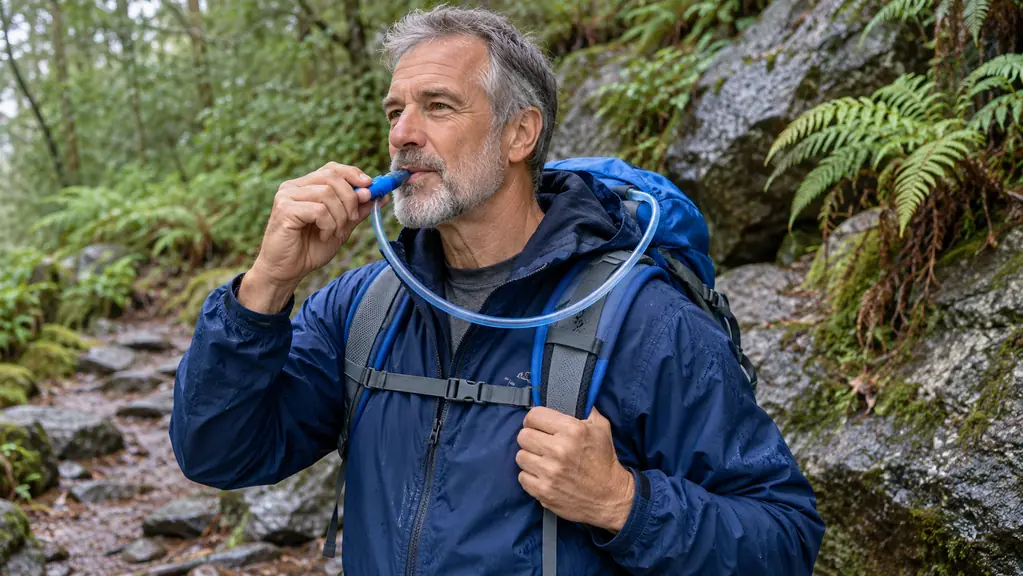
The bladder holds two liters, and the opening is a full two inches across, which matters more than I expected. On a hot July hike I dump ice in first and then water, and the ice goes in without me fighting it through a narrow neck. At the end of the day I can get my hand inside to rinse it out properly instead of swishing water around and hoping for the best.
Drinking while I walk is the whole point, and it worked from the first hike. I do not stop to drink anymore. On a long climb in August that is the difference between sipping steadily and letting myself get dry because stopping is annoying.
My first fill was a mess, and it was my own fault. I put the bladder in the pack, filled it at the sink with the pack standing up, screwed the cap on, and then leaned over to pick up my boots. Water went down the front of my shirt and into the bottom of the main compartment. Now I fill the bladder on the counter, screw the cap down until it stops, set it in the pack, and then run the tube up over the shoulder and set it where I can reach it without looking. It takes two minutes and I have not had a wet shirt since. If you take nothing else from this review, fill it out of the pack first.
One thing I will say plainly: a bladder is more work than a bottle. You have to rinse it, you have to hang it to dry, and if you leave water sitting in it for a week in the heat you will learn a lesson you only need to learn once. I rinse mine after every hike and hang it in the kitchen. If you are the kind of person who will not do that, a bottle is genuinely the better choice for you, and I would rather tell you that than sell you a pack you will leave funky in the garage.
The rainfly came out once, on a June afternoon when the sky went green over the ridge, and the inside of that pack stayed dry.
Two Pounds on My Shoulders
The pack weighs two pounds empty and measures ten inches wide by eighteen and a half inches tall, so it sits short on my back and does not ride down on the climb. The shoulder straps adjust to fit, and the cut is low-profile and athletic, which the listing says fits men, women, and youth. Ray is six inches taller than I am. He borrowed it on one hike in April and had it adjusted to suit him in about a minute before handing it back.
The honest part is my shoulders. All the weight rides there, and on a six-mile day I can feel it by the last mile. That is not a defect in this pack, it is what a light day pack is: you carry it with your shoulders, you keep the load under about ten pounds, and it is fine. I have a stiff lower back in the mornings, and the days I overfill the pack are the mornings I feel it. The fix is my own packing, not the pack.
My back does get damp under it on a humid August hike. Any pack with a panel against your back will do that. I have not found it worse than any other pack I have carried, and I notice it mostly when I take it off at the car.
Rain, Zippers, and One June Afternoon
The pack came with a rainfly, and I have used it exactly once. That was a June hike when the sky went green over the ridge and the thunder started before I was halfway around. I stopped, pulled the rainfly on, and walked the last mile and a half in a steady rain. My lunch, my phone, and my dry bandana were still dry when I got to the car. One use is not a season of testing, so I will not oversell it. I will say it went on fast enough that I did not have to take the pack off.
I have thought about whether one use tells me anything, and I think it does, just not everything. The rainfly went on over the pack without me taking it off, which is the part that matters when the thunder is close and you are standing out in the open. It stayed put for a mile and a half of walking in the rain, and it did not flap loose or fill up with water. What it would do in an all-day soaker I cannot tell you. For the afternoon storm that comes up fast in June, which is the kind we get here, it did the job.
The zippers are weather-guarded, which sounds like marketing until you have had a cheap pack soak through a seam. Through a season of hikes, including that wet June afternoon and a couple of dusty August afternoons when the trail was powder, nothing inside has come out damp or gritty. The pack itself wipes clean with a rag.
The material is a 210D polyester honeycomb ripstop. I am not a fabric person, so what I can tell you is that after eight months of being set down on rock, hung on fence posts, and shoved into the back of the CR-V, there is no fraying and no split seams. The warranty is a limited lifetime, which I have not had to use, and I hope that stays true.
What I Liked
- Two-liter bladder with a full two-inch opening, so ice goes in easily and a hand fits inside for a real rinse
- Eighteen liters split into pockets, enough for lunch, a layer, and the small stuff without turning into a load
- Two pounds empty at ten inches wide and eighteen and a half inches tall, short enough that it does not ride down on climbs
- Rainfly included, and the weather-guarded zippers held through a hard June rain
- Limited lifetime warranty from Teton Sports, and a season of hard use with no fraying or split seams
Where It Falls Short
- All the weight rides on the shoulder straps, and by mile six on a long day I feel it
- The bladder has to be rinsed and hung after every hike or it will turn on you
- Eighteen liters gets tight in cold weather once a fleece and gloves go in
Who This Is For
This is for the day hiker who is tired of stopping to dig a bottle out of a pack. If you walk three to eight miles at a time, you want water you can reach without breaking stride, and you carry a lunch, a layer, and a small kit and nothing more, the Oasis is sized right and light enough that you forget it in the second mile. It suits a hiker who does not mind a one-minute rinse at the end of the day. The adjustability means one pack in the house can fit two people of different sizes, which is how it works at our place.
Who Should Skip It
Skip it if you backpack. Eighteen liters will not carry a shelter, a bag, and a stove, and this is not built for that kind of weight. Skip it if you will not rinse a bladder, because a pack with a sour bladder in it is worse than a bottle. Skip it if you want the load carried lower than your shoulders, because that is not what this is. And skip it if you are a heavy day hiker who brings a camera body and lenses, a full change of clothes, or a stove for a trail lunch, because you will run out of room by the second mile and blame the pack for it.
One season in, it is still the pack I reach for on Saturday morning
The Teton Sports Oasis did the one job I bought it for and did not fall apart doing it. If your day hikes run three to eight miles and you are tired of stopping to dig for water, this is the pack I would hand you.
Amazon Check Today's Price on Amazon →