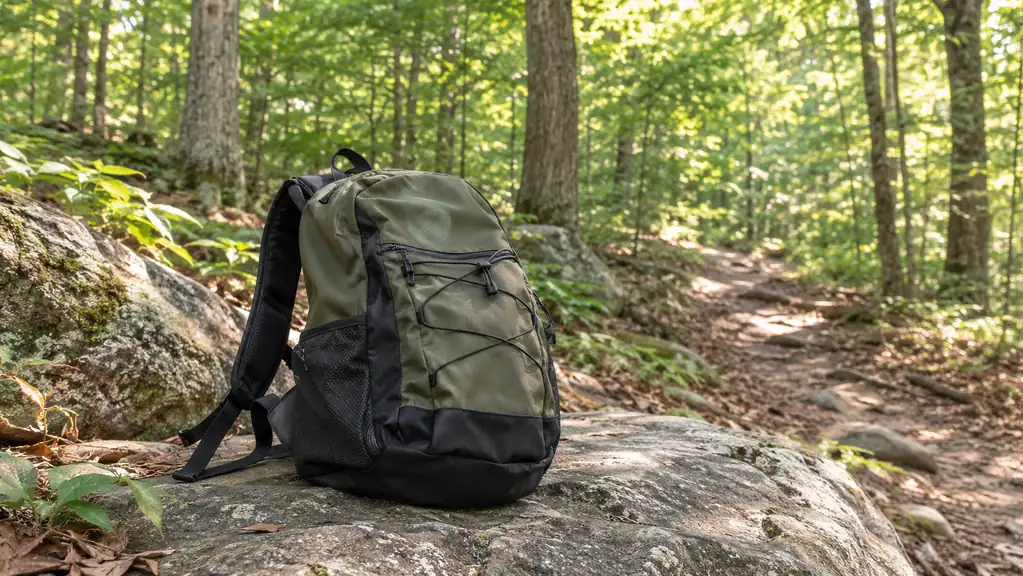
I have carried the Teton Sports Oasis Hydration Pack on my weekly day hikes since the first week of March, and I have never owned the CamelBak Rogue Light. I handled a neighbor's Rogue Light at the campground in June, turned it over, tried the vest on over a T-shirt, and asked him what he thought of it. That is the whole basis for my side of this comparison. I am 57, I live outside Fort Payne, Alabama, and I hike three to six miles most weeks from March to October. I am not a runner and I do not backpack.
For the way I hike, the Teton Sports Oasis is the better choice. It holds 18 liters, it comes with a 2 liter bladder and a rainfly, and it has enough structure to carry a lunch, a rain shell, and a small first aid kit without turning into a sack. The CamelBak Rogue Light is a hydration vest, and that is a different job. If you run or you do fast, short hikes with nothing but water and a phone, the vest shape is the right shape. If you stop to eat, sit on a log, and watch the woods for a while, the Oasis is the pack I would hand you.
| Teton Sports Oasis | CamelBak Rogue Light | |
|---|---|---|
| Storage | 18 liters plus a utility pocket | Vest-style space for small essentials |
| Hydration | 2 liter bladder with a wide 2 inch opening | Vest built for on-the-move hydration |
| Carry style | Shoulder strap daypack with a low-profile athletic cut | Vest harness that sits close to the torso |
| Rain cover | Rainfly included, weather-guarded zippers | No rain cover on the vest I handled |
| Warranty | Limited lifetime | Check CamelBak's current published terms |
| Best for | Day hikes with lunch, layer, and small kit | Runs and fast hikes with almost no gear |
| Bulk | 2 pounds, listed | Vest cut, less bulk around the torso |
I did not test these side by side on the same trail. I hiked with the Oasis on my weekly walks from March through October. I handled the Rogue Light at the campground in June and talked to the man who owns it. I also read the published specs for both. That is not a lab test. It is a neighbor's opinion plus one season on my own back, and I will label it that way.
Where the Teton Oasis Wins
The storage is the reason I reach for it. 18 liters is enough for a day hike and not so much that I fill it with things I do not need. On a normal Saturday I carry a sandwich, an apple, a rain shell, a small first aid kit, my keys, and a bandana. The utility pocket holds the small stuff where I can find it without unpacking the whole bag. The pack is listed at 2 pounds and measures 10 inches wide by 18.5 inches high. It has a shoulder strap harness and a low-profile athletic cut with full adjustability. I am not a trail racer, and it still fits me without bouncing.
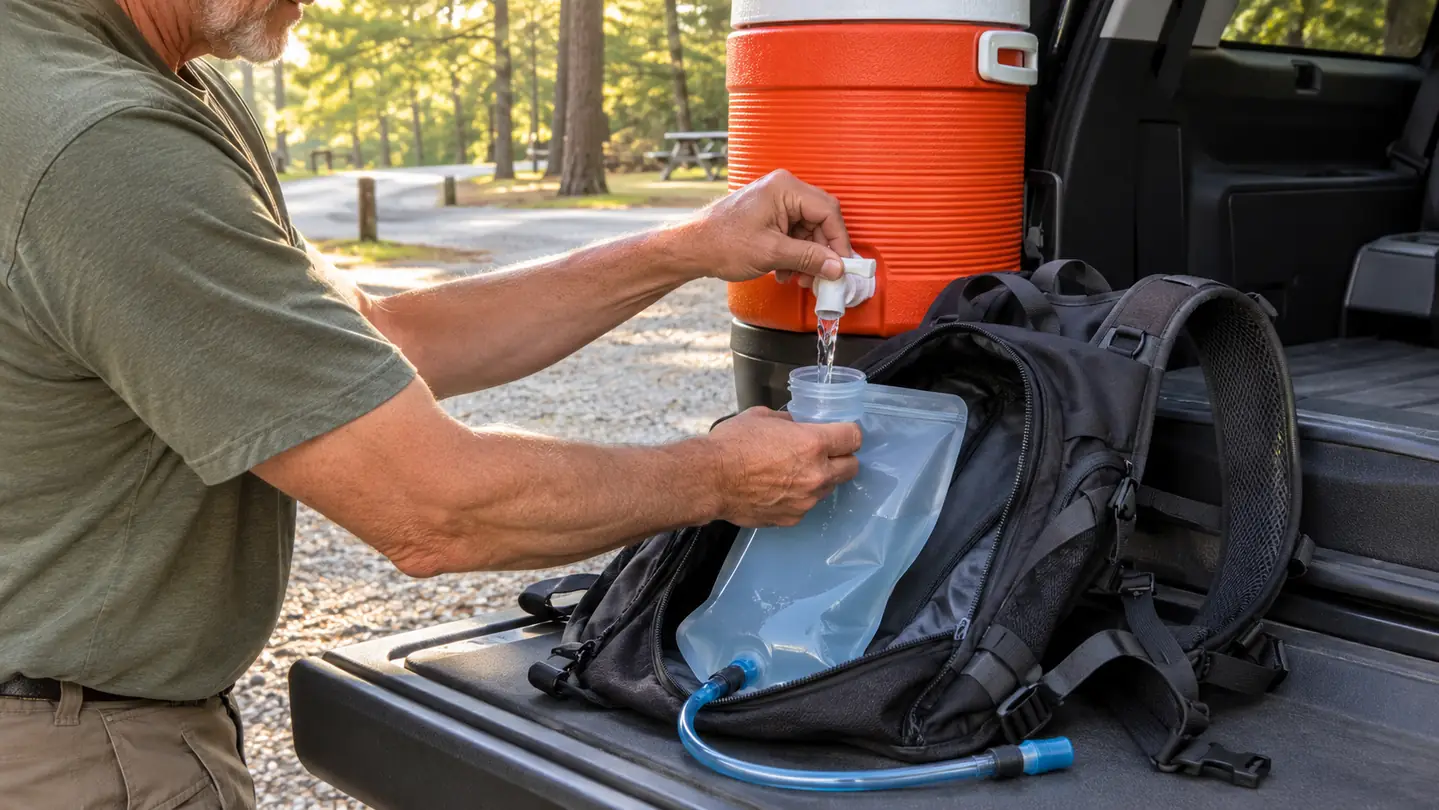
The bladder is the part I use most. It holds 2 liters, and the wide 2 inch opening is why I have not thrown it across the yard. I fill it with ice and water on hot days, screw the cap on, and rinse and hang it after every hike. The pack came with the bladder, the daypack, and a rainfly. The rainfly came out once, on a June hike when the sky went dark over the ridge. I put it on, and the weather-guarded zippers did the rest. I will not tell you the pack is waterproof. It kept my lunch dry for the 40 minutes the rain lasted, and that is the honest report.
The material is 210D 2mm polyester honeycomb ripstop. I am not a gear chemist. What I can tell you is that it has shrugged off branches and the back of my car without a tear. The warranty is listed as limited lifetime, and at 57 that matters to me. I do not want to shop for another daypack in two years. The Oasis is a day pack. I have never used it for an overnight, and I would not. It will not carry a tent, a pad, and a stove, and I would not ask it to.
Fit is the other thing I did not expect to care about. The pack has a low-profile athletic cut and full adjustability, and I can snug the shoulder straps down without feeling like I am wearing a suitcase. On a hot day I loosen them on the climb and tighten them on the descent. That sounds small. It is not small after three miles. The pack stays where I put it, and I am not hitching it up every few minutes. I have not had a hot spot from the shoulder straps, and I am not a person who wants a complicated harness.
The ice is the part I brag about. On a July hike I filled the bladder with ice and water at the car, and the water was still cold at the turnaround. I do not have a number for how long it stays cold. I just know I was glad to have it. When I got home I rinsed the bladder, propped it open, and hung it on the line. The wide opening made that easy. If you have ever tried to dry a bladder through a tiny hole, you know why I mention it.
Where the CamelBak Rogue Light Wins
I have never owned the CamelBak Rogue Light. My neighbor at the campground has one, and he let me put it on over my T-shirt in June. The first thing you notice is the vest cut. It sits against your torso instead of hanging off your shoulders like a daypack. There is less to swing when you move. If you run, or if you hike fast and stop only to drink, that is a real advantage. A vest is built to stay put. The Oasis is built to carry a lunch. Those are different goals.
The Rogue Light also asks less of you in the morning. There is no main compartment to organize, no rainfly to remember, and no decision about which pocket gets the first aid kit. You fill the water, put the vest on, and go. For a short fast hike, that simplicity is the point. I would not call it better for me, because I want a sandwich and a place to sit. But I can see why a runner would pick it. The vest shape is the right shape for motion. The Oasis is the right shape for a slow day.
I want to be fair about the storage question. Less space is not automatically a flaw. When I carry the Oasis, I fill it. When my neighbor carries the Rogue Light, he carries water, a phone, and a light layer, and he is gone. He does not stand at the trailhead deciding which pocket gets the sunscreen. For a two-hour fast hike, that is a better system. The vest is not trying to be a daypack. It is trying to disappear on your back. By the look of it, it does that.
The vest is also made to let you drink while you keep moving. That is the point of a hydration vest. The Oasis does the same job with its bladder, but the vest keeps the whole load closer to your body. If you are moving, that matters. If you are standing at an overlook with a sandwich, it does not. I would not buy the vest for my kind of hike. I can still see that it is the better tool for a fast one.
See the current price and full specs on the Teton Sports Oasis
If you want a day pack that carries lunch, a layer, and a 2 liter bladder without a fight, the Oasis is the one I use. Check the listing for today's price and the full spec sheet.
Amazon Check Today's Price on Amazon →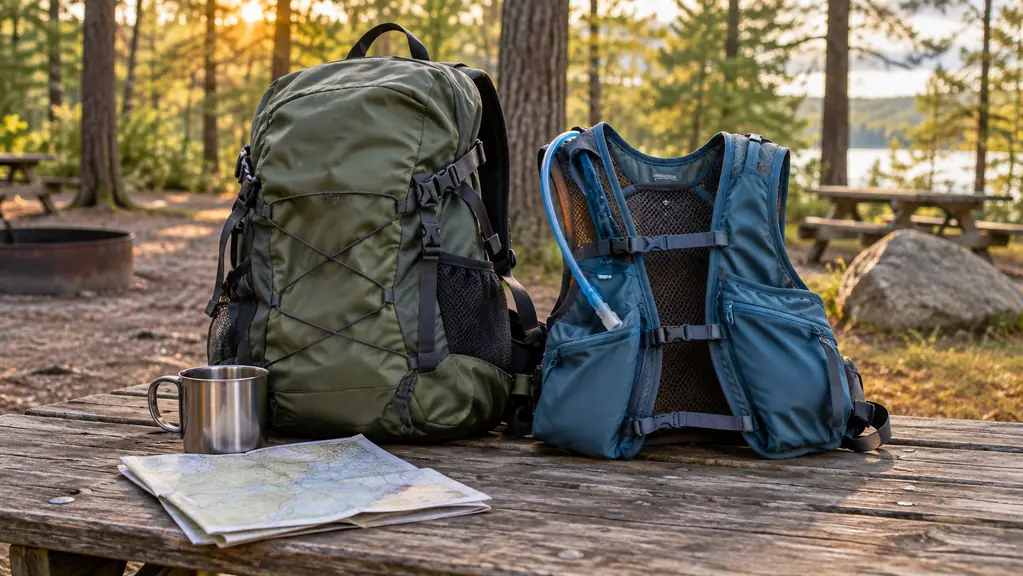
Who Should Buy Which
The Teton Sports Oasis is for the hiker who treats a day hike like a small picnic. You carry water, lunch, a layer, and a few just-in-case items. You stop at the overlook. You sit on a log. You are out for three to six miles, not a race. The 18 liter capacity, the 2 liter bladder, the rainfly, and the weather-guarded zippers all fit that kind of day. It is also for someone who wants a stated limited lifetime warranty and does not want to think about the pack again.
The CamelBak Rogue Light is for the runner or the fast hiker who wants water and almost nothing else. If you are moving at a pace where a swinging pack bothers you, the vest cut is the better answer. It is also for the person who does not want to organize a main compartment. You fill the water and go. That is not a knock on the Oasis. It is just a different job.
If you are between the two, ask yourself what you carry. If the answer is a sandwich and a rain shell, take the Oasis. If the answer is a phone and a gel, take the vest. I would not buy the Oasis for running, and I would not buy the vest for a long lunch on a ridge. Neither pack is wrong. They are just built for different afternoons.
One more way to decide: think about the last time you were on a trail and wished you had something. If you wished for a dry layer or a snack, the Oasis is the pack that answers that. If you wished the pack would stop moving, the vest is the answer. I have had both wishes. Most of my hikes are slow enough that the first wish wins. If yours are fast enough that the second wish wins, buy the vest and do not look back.
If you are shopping for one pack to do both jobs, I would not do that. A pack that is good at carrying a lunch is not a vest that disappears on a run. You will end up with a compromise that does neither well. Pick the job you actually do most weekends. For me that is a slow day hike with a sandwich. For my neighbor it is a fast loop before the heat. We are both right.
What Neither Pack Fixes
A pack does not fix a stiff lower back. I wake up stiff most mornings, and a good pack can make a hike more comfortable, but it is not a treatment. The Oasis carries weight well for a day pack, and the vest keeps weight close to your torso, but neither one will make a bad back good. If your back is talking to you, shorten the hike and carry less. That is the honest advice.
Neither pack will carry an overnight load. The Oasis is 18 liters. The Rogue Light is a vest. If you are packing a tent, a sleeping pad, a stove, and two nights of food, you need a backpacking pack, not either of these. I camp in a state park with a bathhouse and a car at the site. My Oasis is for the hike, not the camp. I would not pretend otherwise.
Neither pack makes you a different hiker. I still stop more often than I did at 40. I still check the weather twice before I leave. I still carry more water than I need on a cool day. A good pack makes those habits easier. It does not erase them. If you are looking for a pack that will make a six mile hike feel like a two mile hike, no pack does that. Buy the one that carries your lunch without complaining, and then go walk.
One last thing. Neither pack is a substitute for telling someone where you are going. I leave a note for Ray when I hike alone, and I carry my phone. A pack with a rainfly and a bladder is nice. It will not call for help. That is not the pack's job. It is mine.
The pack I would hand you for a slow Saturday
The Teton Sports Oasis is not the lightest or the fastest pack in this comparison. It is the one that carries a day's food and water without making me repack at the trailhead. If that is your kind of hike, start here.
Amazon Check Today's Price on Amazon →